
Imagine facing a sudden emergency without the right supplies—no water, no light, no way to communicate. Would you feel safe?
Your emergency preparedness kit can be the difference between stress and survival when every second counts. This kit isn’t just a box of random items; it’s your lifeline, carefully packed with essentials that keep you and your loved ones secure.
In this guide, you’ll discover exactly what to include in your emergency preparedness kit list, so you’re ready for anything, anytime. Keep reading to make sure your kit covers all the crucial needs before disaster strikes.
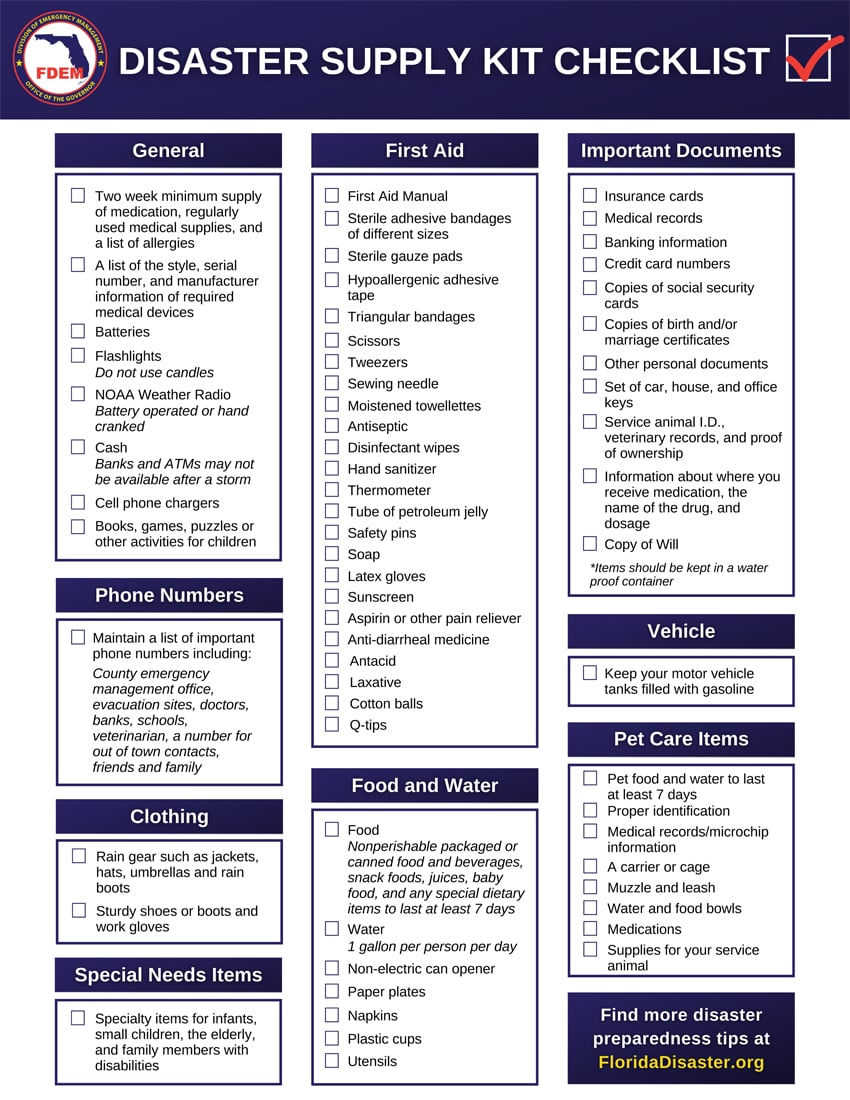
Credit: www.floridadisaster.org
Water And Hydration
Water is a vital part of any emergency preparedness kit. Staying hydrated keeps the body functioning well during stressful times. Lack of water can lead to dehydration and serious health issues. Preparing enough water ensures survival and comfort in emergencies. Knowing how much water you need and how to store it properly is key to effective preparation.
Daily Water Needs
Each person requires at least one gallon of water per day. This amount covers drinking, cooking, and basic hygiene. Children, pregnant women, and sick individuals may need more water. Plan for at least three days of water supply for each person. In hot weather or heavy activity, increase water amounts to stay hydrated.
Storage Tips
Use clean, food-grade containers to store water safely. Avoid containers that held chemicals or non-food substances. Label containers with the date of storage and replace water every six months. Store water in a cool, dark place away from direct sunlight. Keep extra water bottles sealed and ready for quick access during emergencies.
Food Supplies
Food supplies are a key part of any emergency preparedness kit. They provide energy and nutrition when regular food sources are unavailable. Proper planning ensures you have enough food to sustain your family during emergencies.
Choose foods that last long without refrigeration. Focus on items that are easy to prepare and eat. Variety helps maintain morale and nutrition during tough times.
Non-perishable Options
Select foods that keep well for months or years. Canned vegetables, beans, and meats are excellent choices. Dry goods like rice, pasta, and oats also store well. Energy bars and dried fruits add quick snacks and nutrients.
Look for items with high calories and protein to sustain energy. Avoid foods that spoil quickly or need refrigeration. Rotate your supplies regularly to keep them fresh.
Manual Can Opener
A manual can opener is essential for accessing canned food. Battery-powered openers may fail during power outages. A sturdy, easy-to-use manual opener ensures you can open cans anytime.
Include a manual can opener in your kit even if you have electric ones. Test it periodically to make sure it works smoothly. This simple tool can make a big difference in an emergency.
Lighting And Power
Lighting and power are critical components of any emergency preparedness kit. Power outages often occur during disasters, making reliable light sources essential. Proper lighting helps you move safely in the dark and complete important tasks. Having a backup power source keeps communication devices and other electronics running. This section covers the must-have items to keep your lighting and power ready for emergencies.
Flashlights And Batteries
Flashlights are a must-have for emergencies. Choose LED flashlights for bright, long-lasting light. Keep extra batteries in your kit, stored in a dry place. Test your flashlights regularly to ensure they work. Consider headlamps for hands-free use during tasks. Avoid candles as they can be unsafe during power outages.
Alternative Power Sources
Alternative power sources provide backup energy when the grid fails. Portable power banks can charge phones and small devices. Solar chargers are useful for recharging batteries without electricity. Hand-crank generators offer power by manual effort. Store power sources fully charged and ready for use. These options increase your chances to stay connected and informed.

Credit: www.mynspr.org
First Aid Essentials
Fire and navigation tools are vital parts of an emergency preparedness kit. They help you stay safe and find your way if you lose power or get lost. Reliable fire-starting options and accurate maps keep you ready for many situations.
Waterproof Matches
Waterproof matches ignite even when wet. They are stored in sealed containers to keep moisture out. Fire provides warmth, cooks food, and signals for help. These matches are lightweight and easy to carry. Always pack extra for longer emergencies.
Local Maps
Local maps guide you when GPS and phones fail. Paper maps show roads, landmarks, and terrain. They help you plan routes and avoid dangerous areas. Choose detailed maps covering your region. Keep them in a dry, accessible place in your kit.
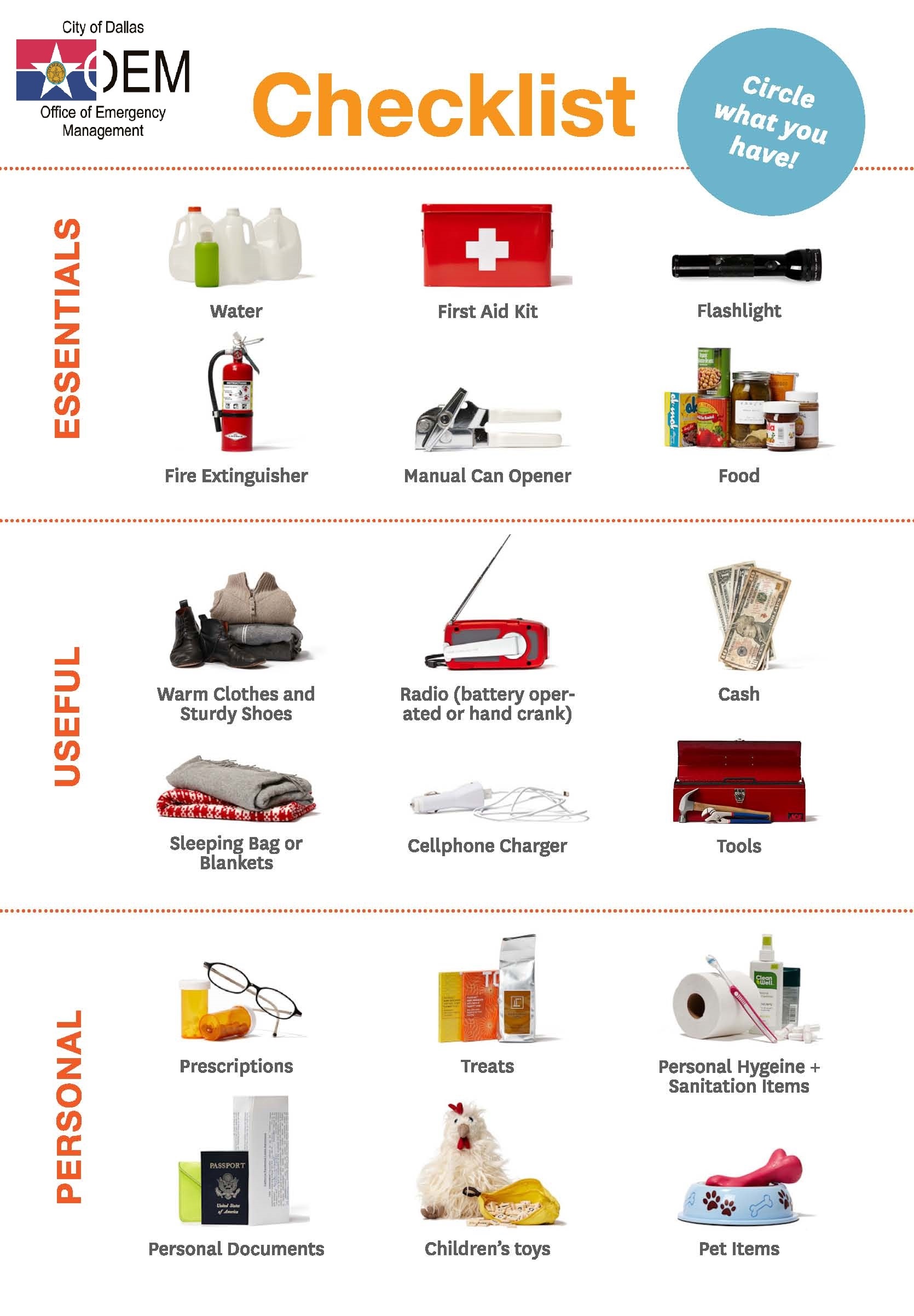
Credit: dallascityhall.com
Frequently Asked Questions
What Are 10 Items You Need For An Emergency Kit?
Ten essential emergency kit items include water, non-perishable food, flashlight with batteries, first-aid kit, multi-tool, radio, whistle, dust mask, moist towelettes, and important document copies.
What Are The 10 Most Important Survival Items?
The 10 most important survival items are water, non-perishable food, flashlight with batteries, first-aid kit, multi-tool, battery-powered radio, whistle, dust mask, moist towelettes, and copies of important documents.
What To Stockpile For 72 Hours?
Stockpile one gallon of water per person daily, three days of non-perishable food, a flashlight with batteries, first-aid kit, radio, whistle, dust mask, moist towelettes, wrench, matches, important documents, cash, and local maps for 72 hours.
What Are The 5 Essentials For An Emergency Kit?
The 5 essentials for an emergency kit are water, non-perishable food, a flashlight with batteries, a first-aid kit, and a multi-purpose tool. These items ensure basic survival, safety, and communication during emergencies.
Conclusion
Being prepared saves time and reduces stress during emergencies. Keep your kit stocked with essentials like water, food, and a flashlight. Regularly check and update items to ensure they work and aren’t expired. Share your plan and kit location with family members.
Small steps today can protect you tomorrow. Stay safe and ready for any situation.


