
Are you ready to take on a challenge that could one day save lives? The Emergency Preparedness Merit Badge is more than just an achievement—it’s your chance to learn vital skills that protect you, your family, and your community in times of crisis.
Before you dive in, there are important prerequisites you need to know. Understanding these requirements will set you up for success and make your journey smoother. You’ll discover exactly what you must accomplish to earn this badge, from earning the First Aid merit badge to creating detailed emergency plans and mastering rescue techniques.
Keep reading to find out how you can prepare yourself to be a true lifesaver.

Credit: worksheets.clipart-library.com
First Aid Badge Requirement
The First Aid Badge Requirement is a key part of the Emergency Preparedness merit badge. Scouts must earn the First Aid merit badge before starting the Emergency Preparedness badge. This ensures they have basic knowledge of how to help in emergencies.
First aid skills are essential in many emergency situations. Knowing how to treat injuries or illnesses can save lives. The First Aid badge teaches these important skills clearly and simply.
Understanding The First Aid Badge
The First Aid badge covers basic medical care. Scouts learn how to handle cuts, burns, and fractures. They also practice CPR and how to assist someone choking. These skills build confidence and readiness.
Why It Is Required For Emergency Preparedness
Emergencies often involve injuries. Having first aid knowledge helps Scouts act quickly and correctly. This requirement prepares them to protect themselves and others during a crisis.
Steps To Earn The First Aid Badge
Scouts must complete several tasks. They learn to identify common injuries and illnesses. They also practice first aid techniques on others. Scouts must demonstrate their skills to a counselor.
Key Skills Covered
Basic wound care, splinting broken bones, and treating burns are included. Scouts also learn to recognize signs of serious illness. CPR and emergency breathing aid are important parts of the badge.
Credit: www.scouting.org
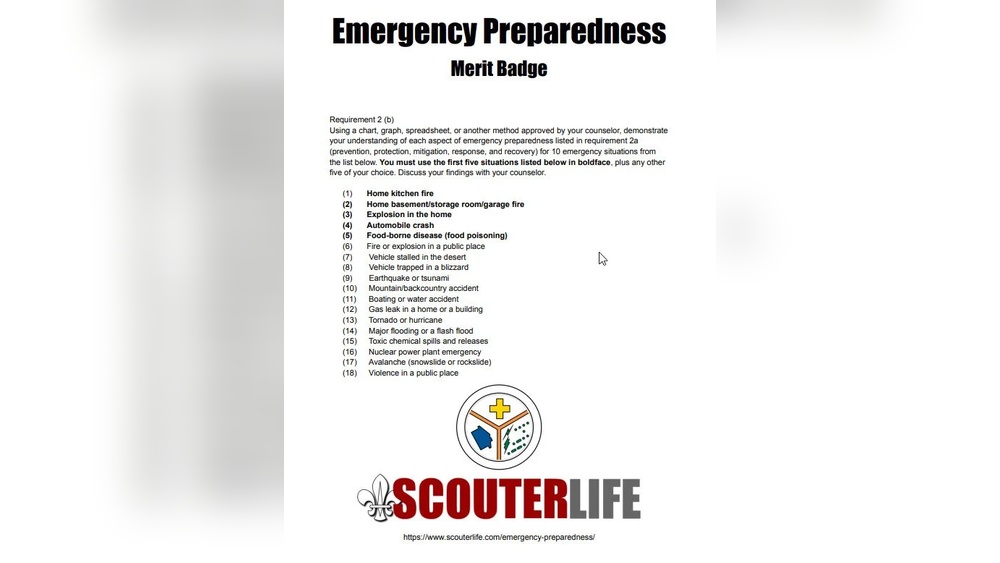
Five Key Preparedness Aspects
The Emergency Preparedness Merit Badge focuses on understanding key parts of being ready for emergencies. Scouts learn about five important areas to stay safe and help others. These areas cover what to do before, during, and after a disaster. Knowing these helps build confidence and skills for real situations.
Prevention And Protection
Prevention means stopping dangers before they happen. Scouts learn how to recognize risks at home and in the community. Protection involves actions that keep people safe from harm. This includes using safety gear and following rules to avoid accidents.
Mitigation And Response
Mitigation lowers the chance of damage during emergencies. Scouts explore ways to reduce risks, like securing heavy objects or planning escape routes. Response is the action taken during an emergency. It covers staying calm, calling for help, and using first aid skills.
Recovery Strategies
Recovery is the process after an emergency ends. Scouts study how to restore normal life and help others rebuild. This includes cleaning up, finding shelter, and seeking support. Knowing recovery steps helps communities heal faster and safer.
Family Emergency Plan
A Family Emergency Plan helps everyone stay safe during a crisis. It guides family members on what to do and where to go. This plan reduces confusion and fear when disaster strikes. Preparing a clear, simple plan is essential for all families.
Creating The Plan
Start by listing all possible emergencies in your area. Talk about the best ways to stay safe during each event. Choose a meeting place outside your home where everyone can gather. Make sure all family members know the plan. Practice the plan regularly to keep it fresh in memory.
Emergency Supply Kit
Gather essential items for your family’s emergency needs. Include water, food, and first aid supplies. Add flashlights, batteries, and important documents. Tailor the kit for all family members, including pets. Keep the kit in an easy-to-find location and check it often.
Family Communication
Decide how family members will contact each other during emergencies. Choose a person outside your area as a central contact. Share important phone numbers and addresses with everyone. Use text messages or social media to save phone lines. Make sure each member understands the communication plan clearly.

Credit: www.scribd.com
Safety And Rescue Skills
Safety and rescue skills are essential for handling emergencies confidently. These skills teach how to help others safely and effectively. Learning them builds readiness for different crisis situations. Scouts develop important abilities like rescuing, signaling for help, and moving injured people carefully. Practicing these skills prepares scouts to act quickly and calmly in emergencies.
Rescue Demonstrations
Rescue demonstrations show how to perform lifesaving techniques. Scouts practice methods such as carrying injured persons and using basic tools. These exercises improve physical readiness and decision-making. Demonstrations help scouts understand safe ways to assist without causing harm. They learn to stay calm and act with care during rescues.
Attracting Rescue Aircraft
Knowing how to attract rescue aircraft can save lives. Scouts learn signals that pilots can see from the air. These include ground symbols, mirrors, and colored cloth. Clear, visible signals increase chances of quick rescue. Scouts practice making signals in open areas. This skill helps survivors call for help when trapped or lost.
Transporting The Injured
Transporting injured people requires caution and skill. Scouts learn to move victims without worsening injuries. Techniques include using stretchers, improvised carriers, or the fireman’s carry. Scouts practice lifting and carrying safely with partners. They also learn when to wait for professional help. Proper transport keeps injured people stable during emergency moves.
Incident Management Systems
Understanding Incident Management Systems is key for the Emergency Preparedness Merit Badge. These systems help organize resources and people during emergencies. Scouts learn how different agencies work together to handle incidents. This knowledge builds confidence and skills in managing real-life crises effectively.
Nims Overview
The National Incident Management System (NIMS) is a standard way to manage emergencies. It allows all responders to work together smoothly. NIMS provides a common language and procedures. This system supports coordination among local, state, and federal agencies. Scouts must know how NIMS helps unify efforts during disasters.
Ics Functions
The Incident Command System (ICS) is part of NIMS. It organizes roles and responsibilities clearly. ICS has five main functions: command, operations, planning, logistics, and finance/administration. Command sets goals and strategies. Operations carry out tasks. Planning gathers and shares information. Logistics provides support and resources. Finance handles costs and paperwork. Scouts learn how ICS keeps emergency response effective.
Local Emergency Agencies
Local emergency agencies play a vital role in incident management. Fire departments, police, EMS, and public health agencies respond to emergencies in communities. These agencies follow NIMS and ICS guidelines. Understanding their roles helps Scouts see how teamwork saves lives. Scouts should know contact points and how to support these agencies during drills and real events.
Emergency Service Participation
Emergency Service Participation is a key part of the Emergency Preparedness Merit Badge. It teaches Scouts how to take part in real-life emergency help activities. This experience builds confidence and readiness. Scouts learn teamwork and responsibility by joining community efforts. Participation also helps Scouts apply their knowledge in practical ways.
Service Projects
Service projects focus on helping communities prepare for emergencies. Scouts may help create emergency kits or maps for evacuation routes. They can assist in spreading awareness about safety measures. These projects offer hands-on experience in emergency readiness. Scouts see how their work benefits others directly. Service projects often involve working with local emergency groups or agencies.
Practice Drills
Practice drills simulate real emergencies to test readiness skills. Scouts practice responding to fires, storms, or medical crises. Drills teach quick thinking and calm actions under pressure. They help Scouts learn how to follow emergency plans effectively. Regular drills improve skills and confidence in emergency situations. Participation in drills is essential for understanding proper response steps.
Troop Mobilization Planning
Troop mobilization planning is a key part of the Emergency Preparedness Merit Badge. It teaches scouts how to organize and move their group quickly and safely during an emergency. This plan helps ensure everyone knows what to do and where to go. Good planning reduces confusion and speeds up response times. Scouts learn to think ahead and act calmly under pressure.
Writing The Plan
Start by listing all possible emergencies your troop may face. Include natural disasters, accidents, or other risks. Write clear steps to follow during each situation. Use simple language so everyone understands. Include meeting points, communication methods, and travel routes. Keep the plan short but detailed. Review and update it regularly to stay prepared.
Roles And Responsibilities
Assign specific roles to each troop member. Choose leaders to guide the group during mobilization. Designate scouts to handle communication, first aid, and supplies. Make sure everyone knows their tasks before an emergency happens. Practice roles during drills to build confidence. Clear roles help the troop work together smoothly and safely.
Home Safety Inspection
Conducting a home safety inspection is a vital step in earning the Emergency Preparedness Merit Badge. This inspection helps identify potential dangers in your living space. It prepares you to act quickly and safely during emergencies. Understanding risks at home can prevent accidents and injuries.
A thorough inspection boosts your knowledge of household hazards. It also improves your ability to protect your family and property. The process involves checking common safety areas and learning about possible threats. This hands-on experience builds confidence and readiness.
Safety Checklist
Start by reviewing a detailed safety checklist. This list covers key areas like smoke detectors, fire extinguishers, and emergency exits. Check that smoke alarms work and replace batteries if needed. Ensure fire extinguishers are charged and accessible. Verify that all doors and windows open easily for quick escape.
Look for loose wires, cluttered walkways, and slippery floors. These can cause trips and falls. Check that appliances are unplugged when not in use. Store hazardous materials like cleaners and chemicals safely out of reach. Proper lighting in hallways and staircases reduces accidents.
Hazard Discussion
Discuss the hazards you find during your inspection. Understand how each hazard can cause harm. Talk about fire risks from cooking and electrical issues. Learn why carbon monoxide detectors are important. Discuss how flooding or severe weather might affect your home.
Share ideas for reducing these hazards. Simple changes can make your home safer. For example, clear clutter to avoid falls. Fix loose steps or railings. Plan escape routes and practice them with your family. Talking about hazards helps you and others stay alert and prepared.
Frequently Asked Questions
What Is The Rarest Merit Badge To Earn?
The rarest merit badge to earn is the Bugling badge. Few Scouts pursue or complete its unique skill requirements.
What Is Needed For Emergency Preparedness?
Emergency preparedness needs water, non-perishable food, first aid supplies, a communication plan, and knowledge of rescue skills. Create a family emergency plan and kit. Include a battery-powered radio and understand local emergency systems like NIMS/ICS. Regular training and drills enhance readiness.
Which Topics Are Required Under The Cms Requirements For Emergency Preparedness?
CMS emergency preparedness requires risk assessment, communication plans, policies and procedures, training, and testing. These must comply with federal and state laws.
What Is The Emergency Preparedness Merit Badge Requirement 7a?
Emergency Preparedness Merit Badge requirement 7a asks scouts to demonstrate three ways to attract and communicate with rescue aircraft during emergencies.
Conclusion
Earning the Emergency Preparedness merit badge builds important safety skills. Scouts learn to plan for emergencies and respond calmly. Creating a family emergency plan helps everyone stay ready. Practicing rescue techniques increases confidence and saves lives. Understanding systems like NIMS improves teamwork during disasters.
Participating in drills or projects strengthens real-world readiness. These steps prepare Scouts for unexpected situations. Taking action today ensures a safer tomorrow.


