
Are you wondering how much a smoke detector costs and whether it fits your budget? Protecting your home and loved ones starts with a simple device, but prices can vary widely.
Knowing the real cost will help you make the best choice without overspending or missing out on key safety features. Keep reading to discover what affects smoke detector prices and how to pick the right one for your needs and wallet.
Your safety is worth it, and understanding the cost is the first step.
Types Of Smoke Detectors
Smoke detectors come in different types. Each type works in a special way to detect fire early. Knowing the types helps you pick the right one. This choice can affect cost and safety. Here are the main types of smoke detectors.
Ionization Smoke Detectors
Ionization smoke detectors sense small smoke particles. They use a small amount of radioactive material. This helps detect fast, flaming fires quickly. These detectors are usually less expensive. They work well in kitchens and living rooms. But they may give false alarms from cooking smoke.
Photoelectric Smoke Detectors
Photoelectric smoke detectors detect larger smoke particles. They use a light beam inside the sensor. Smoke blocks the light, setting off the alarm. These detectors are best for slow, smoldering fires. They cause fewer false alarms. They are slightly more costly than ionization types.
Dual Sensor Smoke Detectors
Dual sensor detectors combine ionization and photoelectric sensors. They catch both fast and slow fires. This makes them more reliable and safer. These units cost more than single sensor types. Many experts recommend dual sensor detectors for home use.
Smart Smoke Detectors
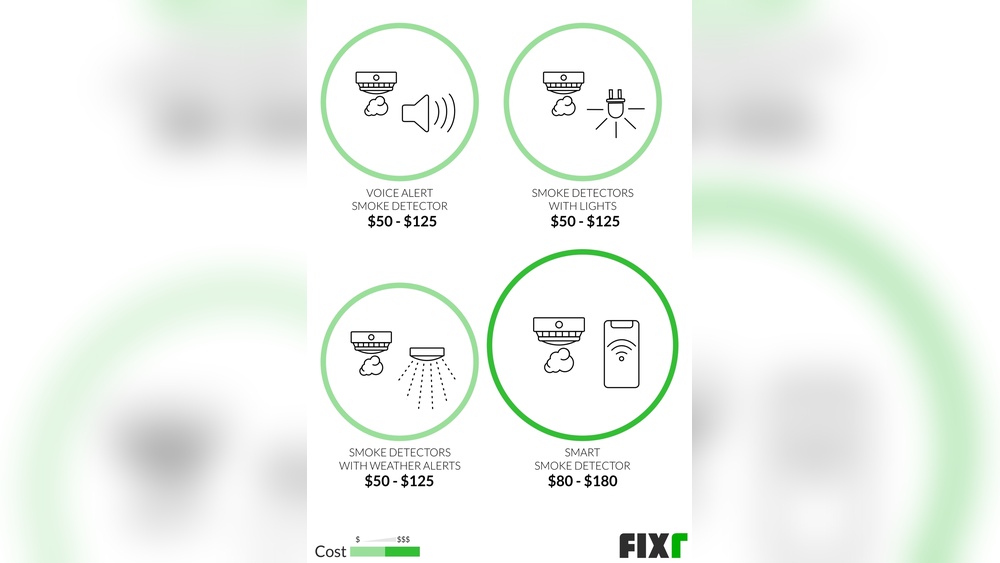
Smart smoke detectors connect to your phone or home system. They send alerts even when you are away. Some can test themselves and report battery status. These models often include carbon monoxide detection too. Smart detectors are usually the most expensive type.

Credit: www.fixr.com
Price Ranges By Type
Smoke detectors come in different types, and their prices vary. Understanding price ranges by type helps you pick the right one for your home. Prices depend on features, technology, and brand. Here is a clear guide to common price ranges.
Budget Options
Basic smoke detectors cost between $10 and $25. These models use simple ionization or photoelectric sensors. They provide essential smoke detection without extra features. Battery-powered units are common in this range. They are easy to install and replace. Ideal for small rooms or tight budgets.
Mid-range Models
Mid-range smoke detectors usually cost $30 to $70. They often combine ionization and photoelectric sensors for better detection. Some models include voice alerts or hush buttons. These detectors may have longer battery life or wireless connectivity. Good for larger homes needing reliable coverage.
High-end Smoke Detectors
High-end smoke detectors cost $80 and up. They offer smart features like app alerts and self-testing. Some connect to home security systems for real-time updates. Advanced models can distinguish between smoke and steam. These detectors give extra safety and convenience. Suitable for tech-savvy users and large households.
Factors Influencing Smoke Detector Costs
Several factors affect the cost of a smoke detector. Understanding these helps choose the right device within your budget. Costs vary based on brand, features, power source, and installation needs. Each plays a key role in pricing.
Brand And Quality
Well-known brands often charge more for smoke detectors. They provide reliable products with tested safety standards. Cheaper brands may save money but can lack durability. Quality affects how long the detector lasts and how well it works.
Features And Technology
Basic smoke detectors cost less than advanced models. Some detectors include carbon monoxide sensors or voice alerts. Smart detectors connect to apps and send warnings to phones. Extra features raise the price but add safety and convenience.
Power Source
Battery-powered smoke detectors are usually cheaper. Hardwired detectors cost more due to wiring and setup. Some models use both battery and hardwire for backup power. Power type affects both cost and maintenance needs.
Installation Requirements
Simple installations cost less. Installing in hard-to-reach places or multiple floors raises costs. Professional installation adds to the price but ensures correct setup. Do-it-yourself options save money but need basic skills.
Credit: www.homedepot.com
Comparing Wired Vs. Wireless Smoke Detectors
Choosing between wired and wireless smoke detectors affects your budget and home safety. Each type has unique features that impact cost, installation, and upkeep. Understanding these differences helps you make the right choice for your home.
Cost Differences
Wired smoke detectors usually cost less per unit. They connect directly to your home’s electrical system. Wireless detectors tend to be pricier due to battery and signal technology. Expect to pay more upfront for wireless models. Prices vary based on brand and features.
Installation Complexity
Wired detectors need professional installation. Electricians must connect them to your home wiring. This adds to the total cost and time. Wireless detectors are easier to install. They only require mounting and battery insertion. No wires mean less hassle and faster setup.
Maintenance Expenses
Wired detectors have lower maintenance costs. They draw power from your home, so no frequent battery changes. Wireless detectors need regular battery replacement. Batteries can last from one to five years. Failure to replace batteries can risk safety. Check wireless units often to ensure they work well.
Additional Costs To Consider
Buying a smoke detector is not the only cost. There are other expenses to plan for. These additional costs keep your smoke detector working well and your home safe. Understanding these helps you budget better.
Battery Replacement
Most smoke detectors use batteries that need regular changes. Usually, batteries last about one year. Some models use long-life batteries that last up to 10 years. Battery cost varies but is generally low. Ignoring battery replacement can cause the detector to stop working.
Maintenance And Testing
Smoke detectors need regular testing to ensure they work. Testing takes only a few minutes but must be done monthly. Cleaning the detector removes dust and dirt that block sensors. Good maintenance extends the device’s life and reliability.
Professional Installation Fees
Some smoke detectors require professional installation. Electric models often need an expert to connect them to your home’s wiring. Installation fees depend on the complexity and location. Hiring a professional ensures the device works correctly and safely.
Credit: homeguide.com
Where To Buy Smoke Detectors
Finding the right place to buy a smoke detector is important. You want to get a reliable product at a good price. There are several options available, each with its own benefits. Choosing the right store can save time and effort.
Online Retailers
Online stores offer a wide range of smoke detectors. You can compare prices and read reviews easily. Delivery to your home is fast and convenient. Many websites provide detailed product descriptions. Buying online helps find the best deals quickly.
Home Improvement Stores
Home improvement stores stock many smoke detector brands. Staff can help with questions and advice. You can see the product before buying. These stores often have good return policies. Shopping here is simple and straightforward.
Specialty Safety Shops
Specialty safety shops focus on fire protection tools. They offer expert knowledge and quality products. These shops may have advanced smoke detectors. Staff can guide you on the best choice. Safety shops provide trusted options for home safety.
Tips To Save Money On Smoke Detectors
Saving money on smoke detectors is possible with smart shopping. Small choices can lead to big savings. Understanding how to buy smoke detectors helps you protect your home without spending too much. Use these tips to keep costs low and safety high.
Buying In Bulk
Buy several smoke detectors at once to lower the price per unit. Stores and online sellers often offer discounts for bulk purchases. This option works well for large homes or multiple properties. Bulk buying reduces trips to the store and saves time.
Seasonal Discounts
Watch for sales during holidays or special events. Retailers often cut prices around Black Friday, New Year, or summer sales. Planning your purchase during these times can save money. Signing up for store newsletters helps you catch these deals early.
Choosing Multi-packs
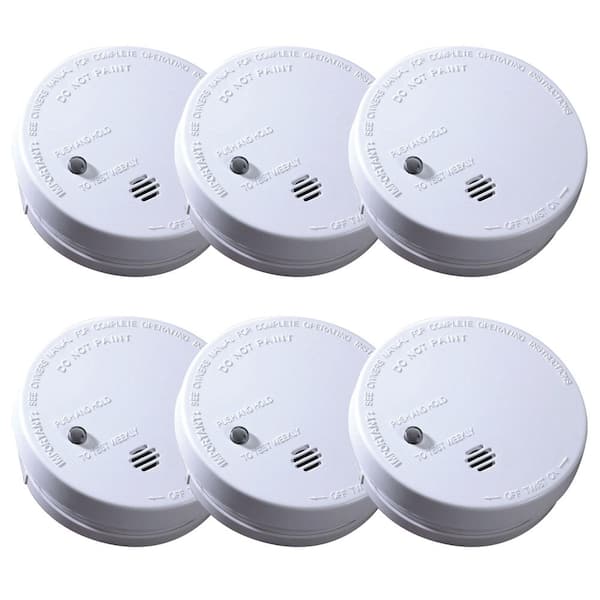
Multi-packs combine several detectors in one package at a lower price. They usually cost less than buying single units separately. Multi-packs are easy to install throughout your home. This choice offers good value and ensures complete coverage.
Frequently Asked Questions
How Much Does A Basic Smoke Detector Cost?
Basic smoke detectors typically cost between $10 and $30. Prices depend on brand, features, and sensor type. Battery-operated models tend to be cheaper than hardwired ones. Basic models offer reliable fire detection for most homes at an affordable price.
What Affects The Price Of A Smoke Detector?
Price varies based on sensor technology, power source, and additional features. Smoke detectors with photoelectric sensors or dual sensors cost more. Hardwired detectors with battery backup are pricier than battery-only models. Smart detectors with Wi-Fi and app integration have the highest prices.
Are Hardwired Smoke Detectors More Expensive?
Yes, hardwired smoke detectors usually cost more than battery-operated ones. Installation requires professional wiring, adding to the expense. Prices range from $40 to $100, excluding installation fees. They offer constant power and are ideal for new construction or major remodels.
How Much Do Smart Smoke Detectors Cost?
Smart smoke detectors typically range from $70 to $150. They offer Wi-Fi connectivity, mobile alerts, and integration with smart home systems. These advanced features increase safety and convenience but come at a higher price point compared to standard models.
Conclusion
Smoke detectors are affordable safety tools for every home. Prices vary based on features and brand. Basic models cost less but still protect well. Advanced detectors may cost more but offer extra benefits. Installing a smoke detector is a smart choice for safety.
Regular checks keep them working properly. Protect your family without spending too much. Safety is always worth the small investment. Choose a detector that fits your budget and needs. Stay safe and worry less every day.


