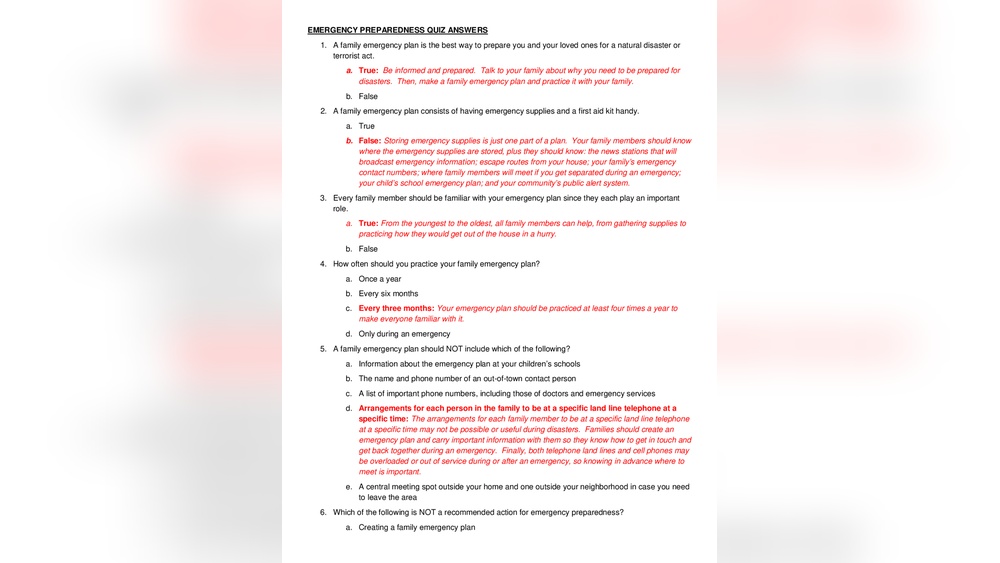

Are you confident in your knowledge of emergency preparedness? Knowing the right answers can make a real difference when seconds count.
This quiz isn’t just a test—it’s a chance to sharpen your skills and ensure you and your loved ones stay safe in unexpected situations. From assembling essential emergency kits to understanding the best actions during disasters, we’ll walk you through key answers that boost your readiness.
Keep reading, because mastering these facts could be the key to protecting your family when it matters most.
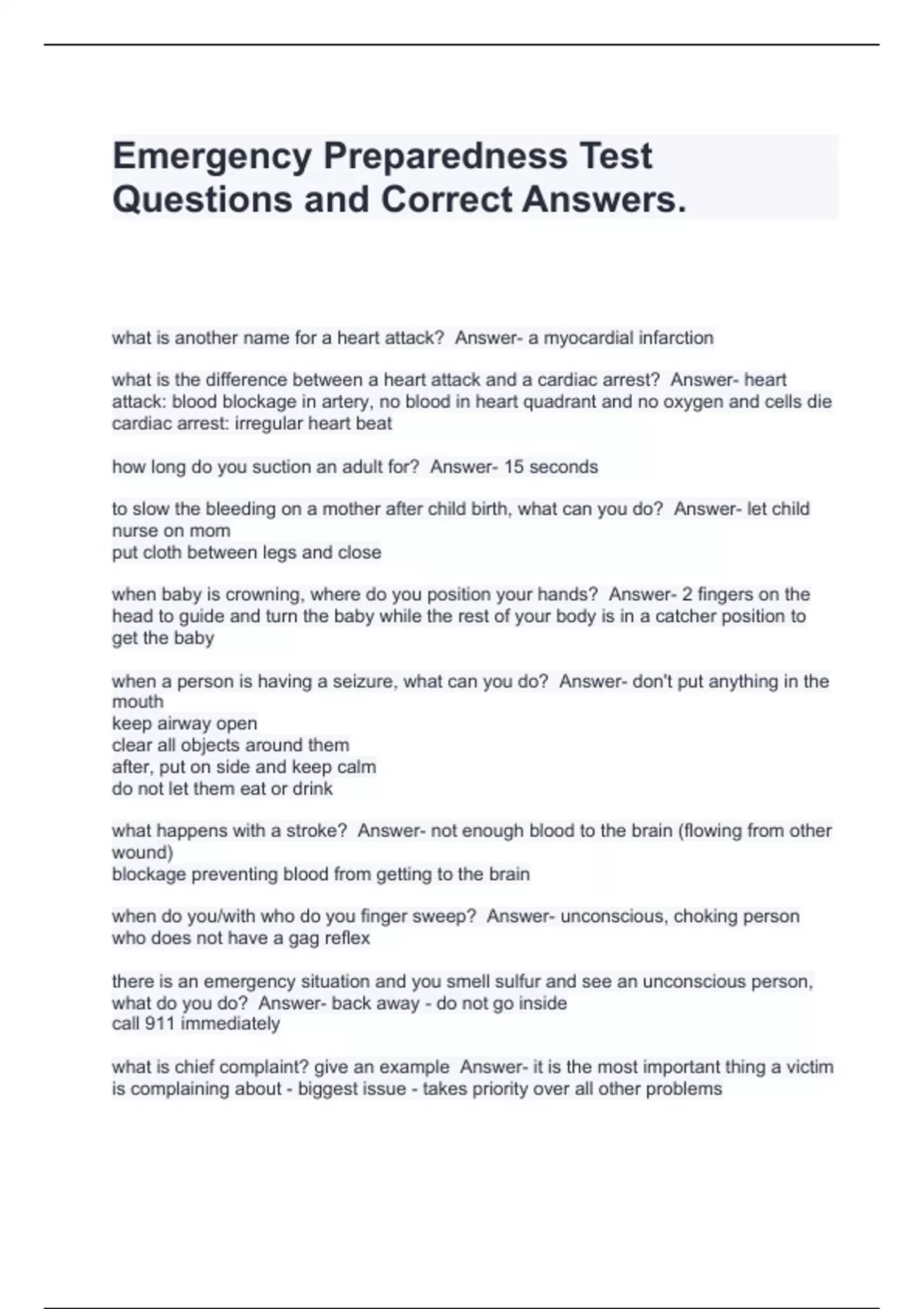
Credit: www.stuvia.com
Emergency Kits Essentials
Emergency kits are vital for safety during unexpected events. Having the right items helps you stay calm and survive until help arrives. Essential supplies cover food, water, first aid, and tools. Preparing your kit carefully can make a big difference in emergencies.
Water And Food Supplies
Water is the most important item in any emergency kit. Store at least one gallon per person per day. Choose non-perishable food like canned goods, granola bars, and dried fruits. Avoid foods that need refrigeration or cooking. Rotate your supplies regularly to keep them fresh.
First Aid Materials
A first aid kit must include bandages, antiseptic wipes, and adhesive tape. Add pain relievers, scissors, and tweezers for small injuries. Include any prescription medications needed by family members. Knowing basic first aid skills improves your ability to help yourself and others.
Tools And Equipment
Tools make survival easier during emergencies. Pack a flashlight with extra batteries and a manual can opener. Carry a whistle to signal for help. A multi-tool or pocket knife adds versatility. Keep waterproof matches or a lighter for fire starting.
Family Communication Plans
Family communication plans are essential for staying connected during emergencies. These plans help family members share information quickly and safely. Knowing who to contact and where to meet reduces stress and confusion. Preparation improves everyone’s chances of staying safe. A clear communication plan keeps families organized and informed.
Out-of-state Contacts
Choose a family member or friend who lives out of state. This contact can relay messages if local lines are busy. Make sure everyone in the family knows this person’s phone number. Out-of-state contacts provide a backup way to communicate. Keep their number saved on all phones and written down in emergency kits.
Meeting Points
Pick safe and easy-to-find locations for family members to meet. Have one spot near home and another outside your neighborhood. Meeting points help reunite family if phones are not working. Make sure all family members know the meeting locations. Practice going to these spots together to build confidence.
Emergency Alert Methods
Use multiple ways to send alerts to family members. Text messages often work when calls cannot get through. Group chats on apps can spread news quickly. Loud alarms or whistles can alert those nearby. Agree on a simple signal or phrase everyone understands. Choose methods that fit your family’s needs and devices.
Key Emergency Response Actions
Knowing the key emergency response actions can save lives during a crisis. These actions follow a simple three-step process. Each step helps you respond quickly and effectively. Understanding these steps improves your readiness and confidence.
Check: Assessing Safety
Start by checking the area for dangers. Make sure it is safe for you to approach. Look for hazards like fire, electricity, or traffic. Then, check the victim’s condition. See if they are conscious and breathing. Identify any visible injuries. This quick assessment guides your next steps.
Call: Contacting Help
Call emergency services without delay. Provide clear information about the location and situation. Ask for help calmly and precisely. If others are nearby, ask them to call or get an AED. Fast contact with professionals can save precious time.
Care: Providing First Aid
Offer first aid based on what you know. Start with basic actions like stopping bleeding or helping with breathing. Stay with the victim and keep them calm. Comfort can reduce shock and fear. Continue care until trained help arrives.

Credit: www.scribd.com
Natural Disaster Responses
Natural disaster responses require quick thinking and clear actions. Knowing the right steps can save lives and reduce harm. This section covers key safety tips for earthquakes, floods, and fires. Understanding these basics helps you act confidently during emergencies.
Earthquake Safety Steps
Drop to your hands and knees to avoid falling. Cover your head and neck with your arms. If possible, take shelter under sturdy furniture. Stay away from windows and heavy objects. Do not run outside during shaking. After the shaking stops, move to an open area. Check yourself and others for injuries. Be ready for aftershocks and stay alert.
Flood Preparedness
Know your flood risk and evacuation routes. Move valuables to higher ground before floods arrive. Avoid walking or driving through floodwaters. Just six inches of moving water can knock you down. Keep emergency supplies in a waterproof container. Listen to weather updates and follow official instructions. Turn off utilities if told to do so. Stay away from damaged buildings and downed power lines.
Fire Evacuation Tips
Have a clear escape plan for every room in your home. Practice your fire drill regularly with your family. Feel doors before opening; if hot, find another way out. Stay low to avoid smoke and cover your nose with a cloth. Use stairs, never elevators, during an evacuation. Call emergency services once you are safe outside. Never go back inside a burning building. Wait for firefighters to declare the area safe.
Cpr And First Aid Basics
Knowing CPR and basic first aid saves lives. These skills help you act quickly in emergencies. Understanding the key steps builds confidence. You can protect others and reduce harm before help arrives.
Performing Cpr
CPR stands for cardiopulmonary resuscitation. It helps keep blood flowing to the brain and heart. First, check if the person is responsive and breathing. If not, call for emergency help immediately. Place your hands in the center of the chest. Push hard and fast, about 2 inches deep at 100 to 120 compressions per minute. Allow the chest to rise fully between compressions. If trained, give rescue breaths after every 30 compressions. Continue until help arrives or the person starts breathing.
Controlling Bleeding
Stop bleeding quickly to prevent shock. Use a clean cloth or bandage to apply firm pressure on the wound. Keep pressing until the bleeding slows or stops. Elevate the injured area above the heart if possible. Avoid removing cloth if it becomes soaked; add more layers instead. For severe bleeding, wrap the wound tightly with a bandage. Seek emergency help immediately for deep or heavy bleeding.
Using An Aed
An AED is an automated external defibrillator. It helps restart the heart during sudden cardiac arrest. Turn on the AED and follow the voice prompts. Expose the person’s chest and attach the adhesive pads as shown. Make sure no one touches the person during analysis. If a shock is advised, the device will tell you. Press the shock button when instructed. Continue CPR after the shock until emergency responders arrive.
Emergency Preparedness Quiz Tips
Preparing for an emergency quiz requires focus and smart study habits. Knowing what to expect helps reduce stress and improves scores. Use simple strategies to learn key facts clearly and quickly. This section offers useful tips for better quiz results on emergency preparedness.
Common Quiz Topics
Emergency quizzes often cover basic safety rules. Topics include fire safety, first aid steps, and natural disaster responses. You may also see questions about evacuation plans and communication methods. Understanding these areas makes answering easier and more accurate.
Effective Study Strategies
Break your study time into short, regular sessions. Focus on one topic at a time for better memory. Use flashcards to review important terms and actions. Practice quizzes help test your knowledge and highlight weak points. Repeat difficult questions until you feel confident.
Resources For Learning
Choose trusted sources like government websites or health organizations. Many offer free guides and practice tests online. Videos can show emergency actions step-by-step. Local libraries and community centers may provide printed materials. Using diverse resources helps you understand and remember better.

Credit: study.com
Frequently Asked Questions
What Is The Answer To The Question “disaster Preparedness”?
Disaster preparedness involves planning and actions to reduce risks before disasters occur. It includes organizing resources, training, and communication for effective response and recovery.
What Are The 5 P’s Of Preparedness?
The 5 P’s of preparedness are: People, Pets, Pills, Papers, and Personal Needs. They ensure safety in emergencies.
What Is Emergency Preparedness Quizlet?
Emergency preparedness Quizlet offers flashcards and quizzes on planning, responding, and recovering from emergencies. It covers safety kits, communication plans, and alert systems.
What Are The 3 C’s Of Emergency Response?
The 3 C’s of emergency response are Check, Call, and Care. First, check the scene and victim. Then, call emergency services. Finally, provide necessary care until help arrives.
Conclusion
Emergency preparedness saves lives and reduces risks in crises. Knowing quiz answers helps you stay ready and confident. Practice these skills often to act quickly and safely. Share this knowledge with family and friends for better safety. Stay alert, stay informed, and keep your emergency plans updated.
Being prepared means protecting yourself and those around you. Keep learning, stay calm, and respond wisely during emergencies.