Is your smoke detector constantly chirping, driving you crazy? That annoying beep can interrupt your focus, disturb your peace, and make you wonder if something is wrong.
But don’t worry—you’re not alone, and the fix is often simpler than you think. You’ll discover easy steps to stop your smoke detector from chirping for good. Keep reading, and regain your quiet space without compromising your safety.
Common Causes Of Chirping
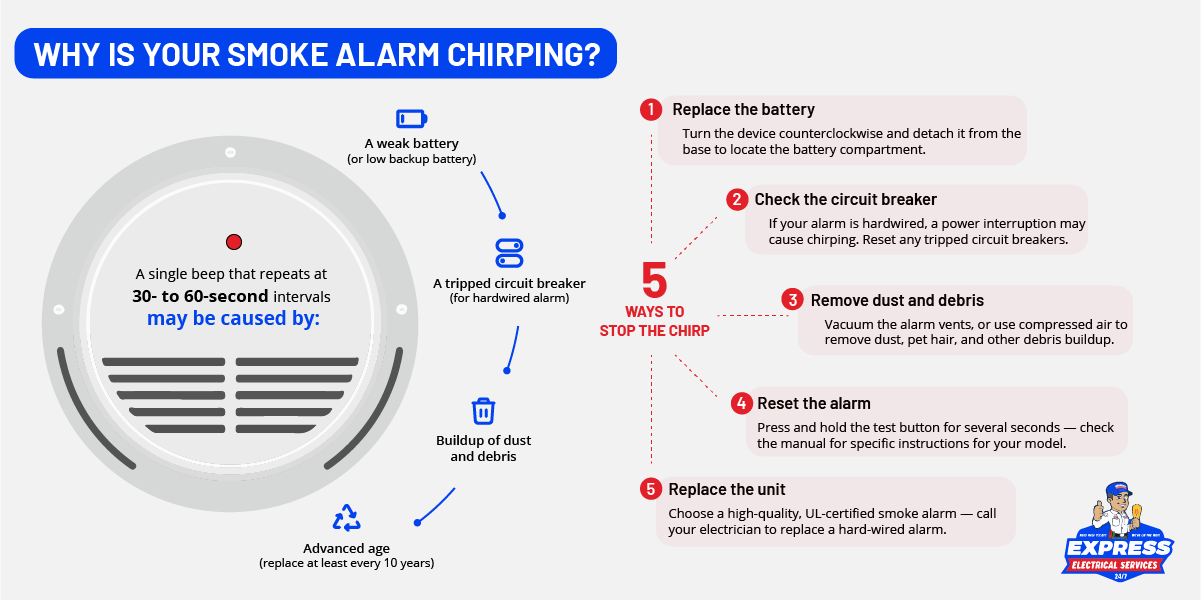
Smoke detectors chirp to alert you about possible problems. These beeps warn about issues that need quick attention. Knowing the common causes helps stop the annoying sound fast. Below are the main reasons your smoke detector might be chirping.
Low Battery Issues
Most chirping sounds come from low batteries. Smoke detectors need fresh batteries to work well. When the battery runs low, the detector beeps to tell you. Changing the battery usually stops the chirping immediately. Always use the right battery type for your device.
Dust And Dirt Build-up
Dust and dirt can block the sensor inside the detector. This blockage can cause false alarms or chirping noises. Cleaning the device regularly helps keep it clear and working properly. Use a soft brush or vacuum to remove dust gently.
End Of Life Alert
Smoke detectors don’t last forever. Most models work for about 8 to 10 years. After this time, they start to chirp to signal replacement. Check the manufacture date on your device. If old, it is time to buy a new smoke detector.
Electrical Problems
Hardwired smoke detectors depend on your home’s electricity. Loose wires or power issues can cause chirping sounds. Turn off power before checking wiring. Call a professional if you find electrical faults to stay safe.

Credit: waynealarm.com
Quick Fixes To Stop Chirping
Smoke detectors chirp to warn you about potential issues. These sounds can be annoying, especially at night. Quick fixes often stop the chirping fast. These simple steps help keep your home safe and quiet.
Replace The Battery
Most chirping comes from a low battery. Open the smoke detector’s cover carefully. Remove the old battery and insert a new one. Use the battery type recommended by the manufacturer. After replacing, press the test button. The chirping should stop immediately.
Clean The Smoke Detector
Dust and dirt can cause false chirps. Use a vacuum cleaner or a soft brush to clean the detector. Focus on vents and openings. Cleaning removes particles that block sensors. Clean the device regularly to avoid future chirping.
Reset The Device
Resetting can clear errors causing chirps. Press and hold the test button for 15-20 seconds. You may hear a beep or see a light flash. This action resets the smoke detector’s internal system. Reset after replacing the battery or cleaning.
Check Electrical Connections
Hardwired smoke detectors need good electrical connections. Turn off power at the breaker box before checking. Look for loose or damaged wires. Tighten any loose connections carefully. If unsure, call a professional electrician. Proper wiring stops chirping caused by power issues.
Preventive Measures
Stopping your smoke detector from chirping starts with simple preventive steps. These steps help keep your device working well. You avoid annoying sounds and stay safe at home.
Regular Maintenance Tips
Check your smoke detector once a month. Clean dust and dirt from it using a soft brush or cloth. Dust can cause false alerts and chirping noises. Test the alarm by pressing the test button. Replace the detector every 10 years to ensure it works properly.
Choosing The Right Battery
Use the battery type recommended by the smoke detector brand. Avoid cheap or low-quality batteries. They run out faster and cause chirping. Change the battery at least once a year, even if it still works. Keep spare batteries handy to avoid delays.
Proper Installation Practices
Install smoke detectors on ceilings or high on walls. Avoid placing them near windows, vents, or kitchens. These spots can cause false alarms and chirping sounds. Follow the manufacturer’s instructions carefully. Secure the detector firmly to avoid loose connections.

Credit: www.angi.com
When To Replace Your Smoke Detector
Knowing when to replace your smoke detector is key to home safety. Smoke detectors do not last forever. Over time, their sensors wear out and become less reliable. A chirping sound may signal that the device needs replacement rather than just a new battery.
Replacing your smoke detector at the right time ensures it works well. It helps protect your family from fire hazards. Regular checks and timely replacement keep your home safe and secure.
Signs Of Device Aging
Smoke detectors usually last around 8 to 10 years. Check the manufacturing date on the back of the device. If it is older than ten years, replacement is necessary. Frequent false alarms or constant chirping can also mean aging. Dust buildup or damage to the casing affects performance. A worn-out smoke detector may fail to detect smoke properly.
Safety Considerations
Old smoke detectors may not alert you during a fire. Safety must be the top priority at all times. Replace devices that show any sign of malfunction immediately. Use only approved smoke detectors for replacement. Test new devices regularly to ensure they work. Proper placement and maintenance improve safety in your home. Never ignore a chirping sound; it might signal a serious issue.
Troubleshooting Persistent Chirping
Persistent chirping from a smoke detector can be annoying. It signals a problem that needs fixing. This section helps you find the cause and solve it. Follow these steps for clear, quiet alarms.
Advanced Diagnostics
Check the battery first. Replace it with a fresh one. Clean the smoke detector with a soft brush or vacuum. Dust can cause false alarms.
Test the sensor by pressing the test button. If it still chirps, the device may have an internal fault. Look for signs of damage or wear. Old detectors often need replacement.
Reset the smoke detector. Remove the battery and power source. Wait a minute, then reinsert and test again. This can clear minor errors in the device.
Professional Help Options
Call a certified electrician if problems persist. They can check wiring and power issues safely. Professionals can test the entire system for faults.
Consider replacing old units with new models. Experts can install advanced smoke detectors with better reliability. This increases your home’s safety.
Regular inspections by professionals ensure your alarms work well. They provide peace of mind and prevent false chirping.
Credit: expresselectricalservices.com
Frequently Asked Questions
Why Does My Smoke Detector Keep Chirping?
Your smoke detector chirps due to low battery, dust buildup, or sensor issues. Regularly check and replace batteries to stop chirping.
How Do I Reset A Chirping Smoke Detector?
To reset, replace the battery, press the test button, and wait for the chirping to stop. Clean the detector if needed.
Can Humidity Cause Smoke Detectors To Chirp?
Yes, high humidity or steam can trigger false chirps. Keep detectors away from bathrooms or kitchens to reduce this issue.
How Often Should I Replace Smoke Detector Batteries?
Replace batteries at least once a year or when the detector chirps. Using fresh batteries ensures reliable smoke detection.
Conclusion
A chirping smoke detector can be very annoying. Check the battery first and replace it if needed. Clean the detector to remove dust and debris. Make sure it is properly installed on the ceiling or wall. Test the alarm regularly to keep it working well.
These simple steps help stop the noise quickly. Stay safe by keeping your smoke detector in good shape. It protects you and your family every day.