
Are you planning to light up your home with LED C9 lights but wonder how many you can safely string together? You’re not alone.
Knowing the right number is key to keeping your decorations bright and your home safe. You’ll discover the simple rules that help you avoid overloaded circuits and flickering lights. Keep reading to make sure your holiday display shines perfectly without any electrical hiccups.
C9 Led Light Basics
C9 LED lights are popular for holiday decorations and lighting projects. They offer bright, colorful light with low power use. Knowing the basics helps you use these lights safely and effectively. This section explains what C9 LED lights are, their common uses, and their energy efficiency.
What Are C9 Led Lights
C9 LED lights are large, bulb-shaped lights. They often measure about 2 inches tall. These bulbs have a pointed tip and a thick base. LED means light-emitting diode, which uses less energy. C9 bulbs come in many colors, like red, green, blue, and white.
Common Uses For C9 Lights
People use C9 lights for Christmas decorations. They hang them on rooftops, trees, and fences. C9 lights also brighten up parties and events. Some use them for outdoor lighting all year. Their large size makes them easy to see from far away.
Energy Efficiency Of Led C9
LED C9 lights use very little electricity. They last longer than traditional bulbs. This means fewer replacements and less waste. Their low power use lowers electric bills. LED bulbs also stay cool, reducing fire risks. They are a smart choice for safe, bright lighting.
Power Limits For Stringing C9 Lights
Power limits matter for stringing C9 lights safely. Knowing how much electricity your lights use helps avoid problems. Overloading circuits can cause outages or fire risks. It is important to understand wattage, amperage, and your home’s circuit capacity. Follow manufacturer rules for the best results. This section explains these key points clearly.
Understanding Wattage And Amperage
Wattage shows how much power a light bulb uses. Amperage measures the flow of electric current. Each C9 light bulb has a watt rating. Multiply watts by the number of bulbs to find total power use. Amps tell you how much current the string draws. Knowing both helps you avoid overloading circuits. Lower wattage or LED bulbs use less power.
Manufacturer Recommendations
Manufacturers set limits on how many C9 lights connect in one string. They test the lights for safety and performance. Always check the packaging or manual for max string length. Following these limits prevents overheating and electrical hazards. Using more lights than recommended can cause damage. Stick to the guidelines to keep your display safe and bright.
Circuit Capacity Considerations
Home circuits have a maximum power capacity. Most household circuits handle 15 or 20 amps. Calculate the total amps your light strings will draw. Don’t exceed 80% of the circuit capacity for safety. Consider other devices using the same circuit. Use multiple circuits for large displays. This prevents tripped breakers and electrical issues.
Safety Tips For Stringing C9 Lights
Stringing C9 lights can create a bright and festive atmosphere. Safety is very important to avoid accidents. Following simple safety tips keeps your decorations safe and lasting longer.
Avoiding Overload
Do not connect too many C9 light strings together. Overloading can cause wires to heat up and start a fire. Check the label on the lights for the maximum number of strings allowed. Always stay below that limit. Use lights with built-in safety features when possible.
Proper Use Of Extension Cords
Use extension cords designed for outdoor use if your lights are outside. Make sure the cords are not damaged or frayed. Do not plug too many cords into one outlet. Keep cords away from water and sharp edges. Secure cords to avoid tripping hazards.
Inspecting Lights For Damage
Check each string of lights before use. Look for cracked bulbs, broken sockets, or exposed wires. Replace damaged bulbs and avoid using cords with cuts or frays. Damaged lights can cause electric shocks or fires. Regular inspections help keep your display safe.
Credit: blog.1000bulbs.com
Calculating Maximum Lights Per String
Knowing the maximum number of LED C9 lights you can string together is important. This helps avoid overloading the circuit and keeps your decorations safe. The calculation depends on the power each bulb uses and the limits of your electrical system.
Understanding these factors allows you to plan your light strings carefully. It also helps prevent blown fuses or tripped circuit breakers. Let’s break down the steps to calculate the maximum lights per string.
Determining Power Draw Per Bulb
Each LED C9 bulb uses a certain amount of power, measured in watts. Check the packaging or product description for the wattage. Most LED C9 bulbs use between 0.5 and 1 watt per bulb.
Knowing the power per bulb helps estimate the total power for the entire string. Multiply the wattage by the number of bulbs to get the total wattage.
Using Circuit Breaker Ratings
Home circuits have limits called circuit breaker ratings. These ratings are measured in amps. Common ratings are 15 or 20 amps.
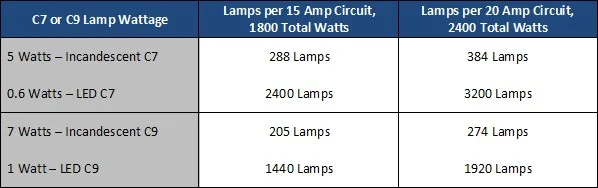
To find the power limit in watts, multiply the breaker amps by the voltage. In the U.S., standard voltage is 120 volts. For example, a 15-amp breaker supports 15 amps × 120 volts = 1800 watts.
Do not use the full wattage capacity. Use 80% of the limit for safety. This prevents overloading and possible fire hazards.
Example Calculations
Suppose each LED C9 bulb uses 0.8 watts. You have a 15-amp breaker rated at 1800 watts total.
Calculate 80% of 1800 watts: 1800 × 0.8 = 1440 watts safe limit.
Divide the safe wattage by the bulb wattage: 1440 ÷ 0.8 = 1800 bulbs maximum.
This number is very high because LED bulbs use little power. Still, check your string’s length limits and wiring before connecting many lights.
Extending Your Display Safely
Extending your LED C9 light display can create a stunning visual effect. But safety is key. Overloading circuits or using the wrong setup can cause problems. Follow these tips to keep your display bright and safe.
Using Multiple Circuits
Spread your lights across several circuits. This prevents overload and reduces fire risk. Check the power limit of each circuit before plugging in lights. Use outlets on different breakers to balance the load.
Do not connect too many strings on one circuit. Keep the total wattage under the circuit’s capacity. This keeps your home’s electrical system safe and stable.
Adding Timers And Controllers
Timers help control when your lights turn on and off. They save energy and reduce the risk of overheating. Controllers let you manage many light strings from one device.
Use timers with built-in safety features. They prevent lights from running too long. Choose controllers designed for outdoor use if you place lights outside.
Managing Outdoor Vs Indoor Use
Use lights rated for outdoor use outside. These are built to resist rain and cold. Indoor lights may get damaged or cause hazards outdoors.
Check all connections and plugs for weather protection. Keep cords away from water and sharp edges. Proper care keeps your display safe and working well.

Credit: www.christmaslightsetc.com
Troubleshooting Common Issues
Troubleshooting common issues with LED C9 lights helps keep your decorations bright and safe. Problems like flickering, tripped breakers, or faulty bulbs can stop your lights from working well. Fixing these issues quickly saves time and prevents bigger electrical problems. Here are some simple tips to solve common troubles with your LED C9 light strings.
Lights Flickering Or Dimming
Flickering or dimming lights often mean a loose connection or power problem. Check each bulb to make sure it fits tightly in its socket. A bad bulb or socket can cause flickering. Also, avoid overloading your outlet with too many light strings. Use a power strip with a surge protector to keep voltage steady. Replace any damaged wires to stop dimming and flickering.
Tripped Breakers
Breakers trip when your light strings draw too much power. Count how many LED C9 lights you connect to one circuit. Each string uses electricity, and too many can overload your breaker. Spread the load across different outlets or circuits. Use LED lights with lower wattage to reduce power use. Reset the breaker after fixing the overload to restore power safely.
Replacing Bulbs And Fuses
Burned-out bulbs or blown fuses stop your lights from working. Replace bulbs with the exact size and type for your LED C9 string. Use bulbs designed for outdoor use if your lights are outside. Check the fuse inside the plug if the whole string is out. Swap the fuse with a new one of the same rating. Keep extra bulbs and fuses handy for quick fixes.

Credit: www.christmas-light-source.com
Frequently Asked Questions
How Many Led C9 Lights Can I Safely String Together?
You can safely string about 50 to 100 LED C9 lights together. This depends on the light’s wattage and the power source. Always check the manufacturer’s guidelines to avoid overloading circuits or causing electrical hazards.
What Factors Affect The Number Of Led C9 Lights?
Wattage, voltage, and power source capacity affect how many LED C9 lights you can string. Higher wattage means fewer lights per string. Also, consider the quality of the wiring and the intended use, such as indoor or outdoor.
Can I Connect Multiple Led C9 Light Strings Together?
Yes, you can connect multiple LED C9 light strings if the combined wattage is within limits. Always follow the maximum wattage ratings on the packaging. Use connectors designed for LED C9 lights to ensure safe connections.
Why Is It Important To Follow Led C9 String Limits?
Following string limits prevents electrical overload and fire hazards. It also ensures consistent brightness and prolongs the lifespan of your lights. Ignoring limits can cause flickering or damage to the light strings.
Conclusion
Knowing how many LED C9 lights to string together keeps your display safe. Avoid overloading your circuit to prevent electrical problems. Check the manufacturer’s guidelines before adding more lights. Use proper extension cords and plugs designed for outdoor use. Keep an eye on the total wattage to stay within limits.
This way, your lights will shine bright without risk. Enjoy decorating with confidence and stay safe all season long.