
Are you wondering how many watts a string of LED Christmas lights uses? Knowing this can help you save money on your electric bill and keep your home safe during the holidays.
Whether you’re decorating your tree or lighting up your house, understanding the power consumption of your LED lights is important. You’ll discover the simple facts about watts in LED Christmas lights and learn how to choose the best options for your needs.
Keep reading to make your holiday season brighter and smarter!

Credit: www.christmaslightsetc.com
Led Christmas Lights Basics
Understanding the basics of LED Christmas lights helps you choose the right set. LED lights use less energy and last longer than traditional bulbs. They come in different styles and sizes to fit your decorating needs. Knowing their types and common lengths makes it easier to plan your holiday display.
Types Of Led Lights
LED Christmas lights come in many styles. Mini string lights are small and bright. C7 and C9 bulbs are larger and often used outside. Rope lights are flexible tubes with LEDs inside. Net lights form a grid, perfect for bushes or walls. Each type has different energy use and look.
Common String Lengths
String lengths vary based on use. Typical indoor strings range from 10 to 50 feet. Outdoor strings can be longer, up to 100 feet or more. Shorter strings suit small trees and windows. Longer strings cover large trees or house roofs. Knowing length helps estimate total wattage and power needs.

Credit: www.christmas-light-source.com
Power Consumption Of Led Lights
LED Christmas lights use much less power than traditional bulbs. This saves energy and lowers electricity bills. Knowing the power consumption helps you plan your holiday decorations smartly. It also ensures your lights run safely without overloading circuits.
Watts Per Bulb
Each LED bulb uses about 0.04 to 0.1 watts. This is very low compared to old-style bulbs. The exact wattage depends on the bulb size and color. Smaller bulbs usually consume less power. This low wattage means LEDs stay cool and last longer.
Total Watts Per String
A typical string has 50 to 100 bulbs. Multiplying bulbs by wattage gives total power use. For example, 100 bulbs at 0.05 watts each use 5 watts total. This is very efficient compared to traditional lights that can use 40 to 100 watts per string. Low total watts mean you can use many strings without high energy costs.
Comparing Led To Traditional Lights
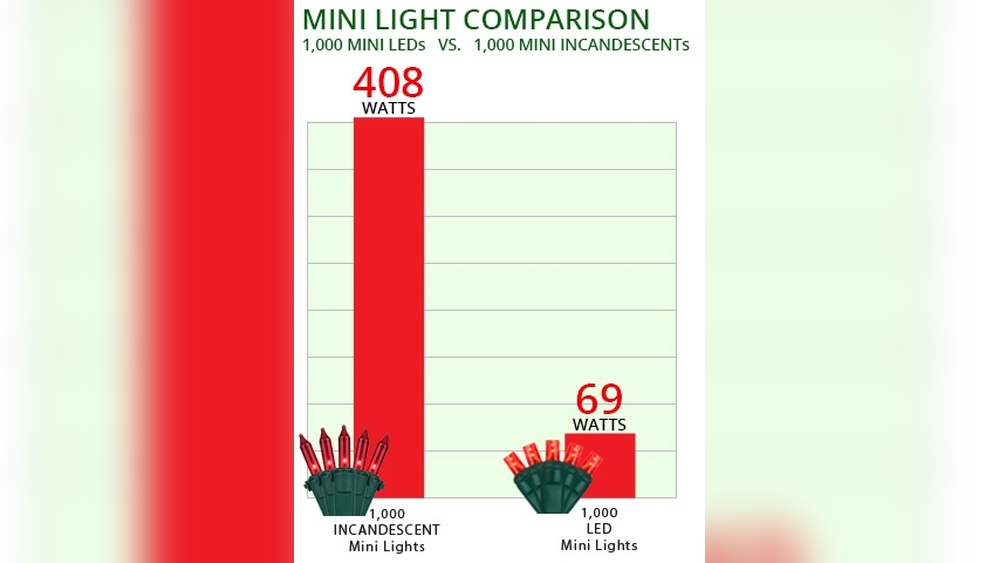
Comparing LED to traditional Christmas lights helps you understand their power use. Traditional lights use more electricity to shine. LEDs use less power but can be just as bright. Knowing the difference helps you choose the right lights for your home and budget.
Energy Efficiency
LED lights use about 75% less energy than traditional bulbs. A string of traditional lights might use 40 watts. The same string of LED lights uses only 10 watts. This means LEDs need less power to work. They also produce less heat, making them safer to use.
Cost Savings
Lower energy use means lower electricity bills. LEDs last longer than traditional lights, often up to 25,000 hours. Traditional bulbs may burn out in 1,000 hours. Fewer replacements save money over time. LEDs may cost more upfront but save money in the long run.
Credit: www.christmas-light-source.com
Calculating Energy Use
Calculating energy use for LED Christmas lights helps you understand their impact on your electric bill. Knowing how many watts your string uses guides smart energy choices. It also lets you plan how long to keep the lights on without overspending.
Estimating Daily Consumption
First, find the wattage of your LED string. Check the packaging or label for this number. Multiply the wattage by the hours you use the lights each day. For example, a 10-watt string used for 5 hours equals 50 watt-hours daily. Convert watt-hours to kilowatt-hours by dividing by 1,000. This number shows your daily energy use in standard units.
Annual Energy Costs
Calculate yearly use by multiplying daily kilowatt-hours by the number of days lit. Next, multiply this by your electricity rate per kilowatt-hour. This gives the annual cost of running your LED lights. LEDs are energy-efficient, so costs stay low even over the holiday season. This simple calculation helps you budget better for festive decorations.
Choosing Energy-saving Options
Choosing energy-saving options helps reduce electricity use and save money. It also lowers the environmental impact of holiday decorations. Many ways exist to enjoy bright, colorful lights without high power bills. Simple changes make a big difference in energy use.
Timers And Sensors
Timers turn lights on and off automatically. Set them to run only during evening hours. This stops lights from running all night. Sensors detect darkness and switch lights on only when needed. They turn lights off at sunrise. Both save energy by limiting light use to the best times.
Low-wattage Models
Low-wattage LED lights use less power than traditional bulbs. They shine just as bright but consume fewer watts. These models last longer and stay cooler to touch. Choosing low-wattage lights lowers your total electricity use. It also reduces heat, making them safer for indoor and outdoor use.
Environmental Impact
LED Christmas lights use less energy than traditional bulbs. This means they have a smaller impact on the environment. Understanding their power use helps us reduce pollution and save resources.
Reducing Carbon Footprint
LED lights use fewer watts than old-style lights. Lower wattage means less electricity. Less electricity means fewer greenhouse gases from power plants. Using LED strings cuts your home’s carbon footprint. It also saves money on electric bills during holidays.
Recycling Led Lights
LED lights contain small amounts of valuable materials. Recycling keeps these materials out of landfills. It also reduces the need to mine new resources. Many communities offer special recycling for holiday lights. Proper disposal helps protect the environment and conserve resources.
Frequently Asked Questions
How Many Watts Does A Typical Led Christmas Light String Use?
A typical LED Christmas light string uses between 5 to 15 watts. This is much lower than traditional incandescent lights, making LEDs energy-efficient and cost-effective for holiday decorations.
What Factors Affect The Wattage Of Led Christmas Lights?
Wattage depends on the number of bulbs, bulb size, and light intensity. More bulbs or higher brightness increase wattage, while energy-efficient LEDs keep consumption low.
How To Calculate Total Watts For Multiple Led Light Strings?
Multiply the wattage of one string by the number of strings used. This helps you estimate total power consumption and avoid overloading circuits during decoration.
Are Led Christmas Lights More Energy-efficient Than Incandescent Lights?
Yes, LED Christmas lights use up to 80% less energy than incandescent bulbs. They last longer and reduce electricity bills during the holiday season.
Conclusion
Knowing the watts in a string of LED Christmas lights helps you save energy. LED lights use much less power than old bulbs. This means lower electricity bills and longer-lasting lights. Always check the watt rating before buying or installing.
It keeps your home safe and your decorations bright. Small details like this make a big difference during the holidays. Enjoy your festive lights without worry or waste. Bright, safe, and smart choices bring more joy.