Imagine giving your cat the freedom to come and go whenever they please—without you having to open the door every time. Training your cat to use a pet door might sound tricky, but with the right steps, you can make it easy and stress-free for both of you.
If you want your furry friend to enjoy this new independence and keep your home peaceful, this guide is exactly what you need. Keep reading, and you’ll discover simple, effective tips to help your cat master the pet door quickly and confidently.
Choosing The Right Pet Door
Choosing the right pet door is the first step to help your cat use it easily. The door must fit your cat’s size and your home’s style. A well-chosen door makes training simple and safe.
Types Of Pet Doors
There are several pet door types. Wall-mounted doors fit through walls and give your cat direct outdoor access. Door-mounted doors attach to regular doors and are easy to install. Window pet doors slide into window frames. Each type suits different home layouts and your cat’s habits.
Measuring For The Perfect Fit
Measure your cat’s height and width carefully. The pet door opening should be slightly larger than your cat. This size helps your cat pass through without trouble. Measure your door or wall thickness too. Accurate measurements avoid fitting problems later.
Material And Durability Options
Pet doors come in plastic, metal, or wood. Plastic doors are light and easy to clean. Metal doors are strong and last longer. Wooden doors blend well with home decor. Choose a material that fits your home style and your cat’s activity level.
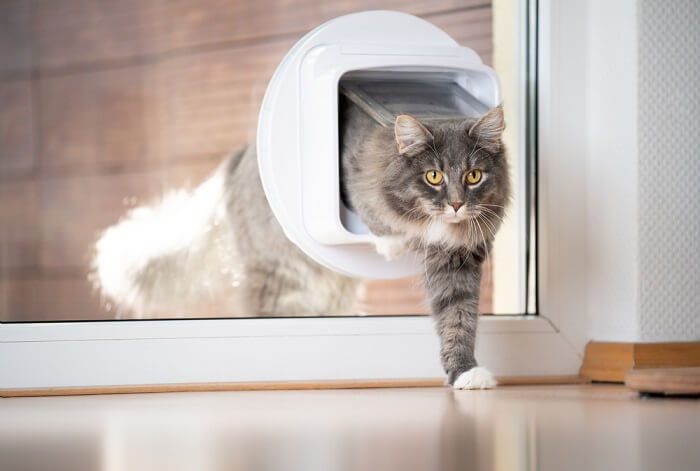
Credit: cats.com
Preparing Your Cat
Preparing your cat to use a pet door takes time and patience. This process helps your cat feel safe and confident. It also makes training easier and more effective. Start slowly and keep sessions short. Watch your cat’s reactions and adjust as needed.
Introducing The Pet Door
Show the pet door to your cat without forcing interaction. Let your cat sniff and explore it naturally. Use treats or toys near the door to create interest. Praise your cat gently for any curiosity shown. Avoid rushing this step to prevent fear or stress.
Familiarizing With The Door Area
Make the door area inviting and calm. Clear away any clutter or distractions. Spend time playing or sitting near the door with your cat. Encourage your cat to approach the door at its own pace. This builds comfort and reduces anxiety around the door.
Ensuring A Safe Environment
Check that the pet door opens smoothly and safely. Remove any sharp edges or obstacles nearby. Keep the area well-lit to help your cat see clearly. Make sure no other pets or dangers wait outside. A secure space helps your cat feel protected while learning.
Training Techniques
Training your cat to use a pet door requires patience and clear methods. Cats learn best with gentle guidance and rewards. The right techniques help your cat feel safe and confident. This section explains simple steps to teach your cat to use the pet door.
Using Treats And Positive Reinforcement
Start by placing tasty treats near the pet door. Let your cat smell and see the treats. Praise your cat softly when it approaches the door. Giving treats after each small step builds trust. Positive rewards make your cat want to try again. Avoid punishment; it can cause fear and confusion.
Guiding Through The Door
Show your cat how to pass through the door gently. Hold the flap open at first. Use a toy or treat to encourage your cat to go through. Move slowly and stay calm. Repeat this several times. Let your cat explore at its own pace. Gradual guidance helps your cat understand the pet door.
Gradual Increase In Door Usage
Allow your cat to practice the door daily. Start with short sessions and increase time slowly. Close the flap a little more each day. This helps your cat get used to pushing the door. Reward every successful attempt with treats or praise. Consistency is key to building your cat’s confidence.

Credit: closerpets.co.uk
Troubleshooting Common Issues
Troubleshooting common issues helps your cat learn to use the pet door faster. Some cats feel scared or unsure at first. Others may avoid the door or struggle if there are many cats in the house. Knowing how to handle these problems makes training easier.
Overcoming Fear Or Hesitation
Fear is normal for cats new to a pet door. Start by letting your cat explore the door without forcing it. Use treats to encourage gentle touches on the flap. Praise your cat each time it gets closer to passing through. Patience is key. Practice short sessions daily to build confidence.
Handling Door Avoidance
Some cats avoid the pet door completely. Check if the flap is too heavy or noisy. Replace it with a lighter or quieter one if needed. Make the area around the door inviting. Place toys or treats near the entrance. This helps your cat associate the door with positive experiences.
Managing Multiple Cats
Multiple cats can cause competition or confusion around the pet door. Teach each cat separately at first. Use different treats or times for training sessions. Ensure the door is large enough for all cats to pass comfortably. Watch for bullying and separate cats if necessary during training.
Maintaining The Pet Door
Maintaining the pet door is important for your cat’s safety and comfort. A clean and well-kept door helps your cat use it easily. Regular care prevents problems and extends the door’s life.
Regular Cleaning Tips
Wipe the pet door with a damp cloth often. Remove dirt, dust, and pet hair from the flap and frame. Use mild soap if the door is very dirty. Dry it well to stop mold or rust. Clean both sides to keep the door smooth and easy to use.
Checking For Wear And Tear
Look closely at the pet door every week. Check the flap for cracks or holes. Make sure the hinges or magnets work well. Replace worn parts quickly to keep the door safe. Fix loose screws or broken pieces before they cause trouble.
Seasonal Adjustments
Adjust the pet door for different seasons. In winter, add weather stripping to keep cold air out. Check seals to stop drafts and keep your home warm. In summer, open vents if the door has them for better airflow. These small changes help your cat stay comfortable year-round.

Credit: www.petdoors.com
Frequently Asked Questions
How Long Does It Take To Train A Cat To Use A Pet Door?
Training a cat to use a pet door usually takes 1 to 2 weeks. Patience and consistency are key. Start by encouraging your cat with treats and positive reinforcement near the door. Gradually increase the use until your cat feels comfortable using it independently.
What Are The Best Treats To Motivate Cats For Pet Door Training?
Soft, tasty treats like small pieces of cooked chicken or commercial cat treats work best. Use these treats to reward your cat each time it approaches or uses the pet door. This positive reinforcement helps build a strong association with the door and encourages repeated use.
How Do I Introduce My Cat To A New Pet Door?
Begin by leaving the door open and letting your cat explore it freely. Use treats and toys to lure your cat through the opening. Gradually lower the flap once your cat is comfortable. Repeat this process daily until your cat confidently uses the door.
Can All Cats Learn To Use A Pet Door?
Most cats can learn to use a pet door with proper training. However, older or timid cats may take longer or need extra encouragement. Patience and gentle guidance increase the chances of success. Some cats might never fully adapt, so monitor their progress closely.
Conclusion
Training your cat to use a pet door takes time and patience. Start slow and keep sessions short. Reward your cat with treats and praise often. Watch your cat’s behavior and adjust training as needed. Soon, your cat will enjoy the freedom of going outside safely.
This simple skill makes life easier for both of you. Stay calm and positive throughout the process. Your cat will learn step by step. Enjoy the journey together.