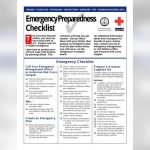
When disaster strikes, having a clear and easy-to-follow emergency preparedness plan can make all the difference for you and your loved ones. But where do you start?
That’s where an Emergency Preparedness Plan PDF comes in handy. It’s a simple, printable tool that guides you step-by-step through what to do before, during, and after an emergency. Imagine having one place to keep all your important contacts, evacuation routes, and supply checklists—ready to access whenever you need it.
You’ll discover how to create your own personalized plan using free, reliable PDF templates. By the end, you’ll feel confident and prepared to protect what matters most, no matter what unexpected event comes your way. Keep reading to find out how to get your hands on the best emergency preparedness plan PDFs and start planning today.
Essentials Of Emergency Plans
Emergency preparedness plans help protect lives and property. They provide clear steps to follow during crises. A well-made plan reduces confusion and panic. It ensures everyone knows what to do and where to go. The essentials cover common scenarios, evacuation steps, communication, and special needs.
Common Emergency Scenarios
Planning starts with identifying likely emergencies. These include fires, floods, storms, and power outages. Each scenario needs specific actions to stay safe. Knowing risks helps prepare the right supplies and responses. Plans should match the local environment and weather patterns.
Evacuation Procedures
Evacuation means leaving a dangerous area quickly and safely. The plan must show clear routes and exit points. It should include where to meet after leaving. Practice drills help everyone remember the steps. Keep emergency kits ready with food, water, and important documents.
Communication Strategies
Good communication is vital during emergencies. The plan must list contacts for family, neighbors, and emergency services. Decide how to share information if phones fail. Use radios, text messages, or social media updates. Assign someone to check on others and report status.
Special Considerations For Vulnerable Individuals
Some people need extra help in emergencies. This includes children, elderly, and those with disabilities. The plan should address their unique needs clearly. Prepare medication, mobility aids, and personal care items. Assign helpers and ensure safe transport options.
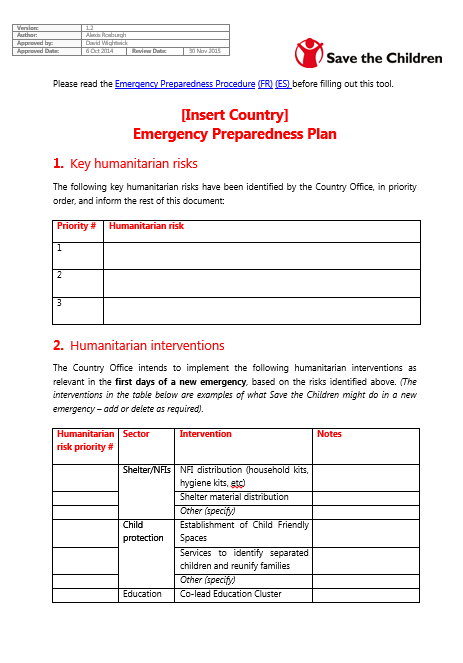
Credit: resourcecentre.savethechildren.net
Building Your Emergency Kit
Building your emergency kit is a vital step in staying safe during unexpected events. A well-prepared kit helps you manage through emergencies with essential supplies. Focus on including items that cover basic needs. Keep your kit updated and easy to carry. Here are key categories to consider when assembling your kit.
Food And Water Supplies
Include non-perishable foods like canned goods, dry pasta, and rice. Pack enough for at least three days per person. Add high-energy snacks such as nuts and granola bars. Store at least one gallon of water per person daily. Use sealed containers and replace supplies regularly to keep them fresh.
Medical And Hygiene Items
Gather a first aid kit with bandages, antiseptics, and pain relievers. Add prescription medications and copies of medical documents. Include hygiene products like soap, toothpaste, and feminine supplies. Pack hand sanitizer and disinfecting wipes to maintain cleanliness. These items help prevent illness during crises.
Tools And Safety Gear
Carry a flashlight with extra batteries and a whistle for signaling. Include a multi-tool or pocket knife for various tasks. Add a battery-powered or hand-crank radio to receive news updates. Pack sturdy gloves and dust masks for protection. These tools enhance your safety and ability to respond.
Pet Care Essentials
Prepare food and water supplies for your pets for several days. Include bowls, leashes, and any necessary medications. Carry waste bags and grooming supplies for hygiene. Keep identification tags and records handy. Caring for pets is part of a complete emergency plan.
Family Emergency Preparedness
Family emergency preparedness is essential for safety during unexpected events. Having a clear plan helps families respond quickly and stay calm. Preparation reduces confusion and protects loved ones.
Every family should create a plan tailored to their needs. This plan guides actions before, during, and after emergencies. It improves communication and ensures everyone knows what to do.
Creating A Family Communication Plan
Start by listing important phone numbers on paper and in digital form. Choose a primary contact outside your area. This person can relay information if local lines are busy.
Decide how family members will communicate if separated. Text messages often work better than calls during disasters. Share meeting points for different situations, like home or a safe public spot.
Assigning Roles And Responsibilities
Assign simple tasks to each family member. For example, one person gathers emergency supplies while another checks on pets. Clear roles reduce panic and speed up actions.
Make sure everyone understands their role. Practice explaining tasks and answer questions. Roles can change based on age and ability.
Practice Drills And Updates
Regularly practice your emergency plan with the whole family. Run drills for fire, earthquake, or severe weather scenarios. Practice helps identify problems in the plan.
Update your plan at least once a year. Change contact numbers, meeting spots, or roles as needed. Keep emergency kits stocked and check expiration dates on supplies.
Workplace Emergency Plans
Workplace emergency plans are essential for ensuring safety during unexpected events. They help protect employees and minimize damage. Every business should have a clear plan tailored to its environment and risks. A well-structured plan improves response time and reduces confusion. Emergency preparedness plan PDFs provide easy access to templates and guidelines for workplaces.
Developing An Emergency Action Plan
An emergency action plan outlines the steps employees must follow during crises. It identifies potential hazards and assigns roles and responsibilities. The plan should cover fire, medical emergencies, natural disasters, and security threats. Clear communication channels and contact information must be included. Updating the plan regularly keeps it relevant and effective.
Evacuation And Shelter-in-place Procedures
Evacuation procedures guide employees to exit the building safely. Routes and exits must be clearly marked and accessible. Shelter-in-place instructions help protect workers when evacuation is unsafe. Both procedures require clear signage and easy-to-understand instructions. Regularly review and improve these procedures to match changing workplace layouts or risks.
Training And Drills
Training ensures all employees understand the emergency action plan. Drills simulate real emergencies to practice response actions. Frequent drills build confidence and identify weaknesses in the plan. Training should be simple and repeated for new hires. Documenting drills and feedback helps improve future preparedness.
Compliance With Osha Guidelines
OSHA sets rules for workplace safety and emergency preparedness. Following these guidelines reduces legal risks and improves safety standards. OSHA requires written emergency action plans in many workplaces. Regular inspections and reviews ensure compliance. Staying updated on OSHA changes keeps the plan effective and lawful.
Accessing Free Pdf Templates
Accessing free PDF templates for emergency preparedness plans helps individuals and organizations act quickly during crises. These templates provide clear steps and checklists for various emergencies. They save time and ensure important details are not overlooked. Anyone can download and customize these PDFs to fit their needs. Using trusted sources guarantees accurate and useful information.
Government Resources
Government websites offer reliable emergency preparedness PDFs. FEMA and Ready.gov provide free templates for families and workplaces. These documents cover evacuation routes, communication plans, and emergency contacts. They follow official guidelines to keep you safe. Downloading from these sites ensures up-to-date and accurate information.
Nonprofit Organizations
Many nonprofits share free emergency plan PDFs online. The American Red Cross provides detailed checklists and family plan templates. These resources help users prepare for natural disasters and other emergencies. Nonprofits focus on easy-to-understand formats. Their templates often include helpful tips for all ages.
Customizable Templates For Families And Workplaces
Customizable templates allow users to add personal details quickly. Families can include medical information, meeting points, and emergency contacts. Workplaces can list employee roles, evacuation procedures, and safety measures. Editable PDFs make updates simple. This flexibility helps keep plans current and practical.

Credit: ivinsutah.gov
Digital Tools And Apps
Digital tools and apps make emergency preparedness easier and faster. They help you get alerts, share plans, and track supplies on your phone or computer. Using these tools keeps your emergency plan updated and accessible anytime. They support quick actions during an emergency.
Emergency Alert Systems
Emergency alert apps send real-time warnings about weather, fires, or other dangers. These alerts come from trusted sources like government agencies. You receive notifications instantly, helping you stay safe and informed. Some apps also offer tips on what to do next.
Plan Sharing And Storage
Digital tools allow you to store your emergency plan as a PDF online. You can share it with family, friends, or coworkers easily. Cloud storage keeps your plan safe even if your device is lost or damaged. Everyone involved can access the plan anytime from different locations.
Checklist And Inventory Management
Apps help you create and manage emergency checklists for supplies and tasks. You can track what items you have and what you need to buy. These tools remind you to update or replace expired items. They make sure your emergency kit is ready when needed.
Updating And Reviewing Plans
Keeping an emergency preparedness plan up to date is crucial. Emergencies can change, and your plan must reflect those changes. Regular updates ensure safety measures stay effective. Reviewing your plan helps find gaps and improve responses. It keeps everyone ready for any situation.
Regular Plan Evaluation
Check your plan at least twice a year. Look for outdated information or missing details. Verify contact numbers, meeting spots, and supplies. Testing the plan with drills can show what needs fixing. A fresh review keeps the plan reliable and clear.
Incorporating Feedback
After drills or real events, ask for feedback. Listen to everyone involved, including family or employees. Use their ideas to improve the plan. Simple changes can make a big difference. Feedback helps create a plan that works well for all.
Adjusting For Seasonal Changes
Seasons bring new risks like storms or heatwaves. Adapt your plan for weather shifts and natural threats. Update emergency supplies for winter or summer needs. Check evacuation routes for season-specific hazards. Seasonal updates keep your plan practical and ready year-round.
Community And Local Resources
Community and local resources form the backbone of any effective emergency preparedness plan. These resources help individuals and families stay informed, organized, and ready for unexpected events. Knowing where to find support and how to connect with local services can make a big difference in an emergency.
Local agencies and community groups offer valuable tools and guidance. They provide plans, training, and opportunities to get involved. Access to these resources strengthens the entire community’s ability to respond and recover quickly.
Local Emergency Management Offices
Local emergency management offices coordinate disaster response and recovery efforts. They provide updates on hazards and emergency alerts. These offices often share printable emergency preparedness plan PDFs. Residents can use these to create tailored plans for their households. Contacting your local office is a good first step in emergency planning.
Community Preparedness Programs
Community preparedness programs teach essential skills and knowledge. They offer workshops on first aid, evacuation, and communication. Many programs provide printed materials, including emergency plan templates. Joining these programs boosts confidence and readiness. They also help neighbors support each other during crises.
Volunteer Opportunities
Volunteering in emergency services enhances community resilience. Local groups need volunteers for disaster drills and response teams. These roles provide hands-on experience and training. Volunteers often receive access to exclusive resources and guides. Getting involved strengthens local networks and improves overall safety.
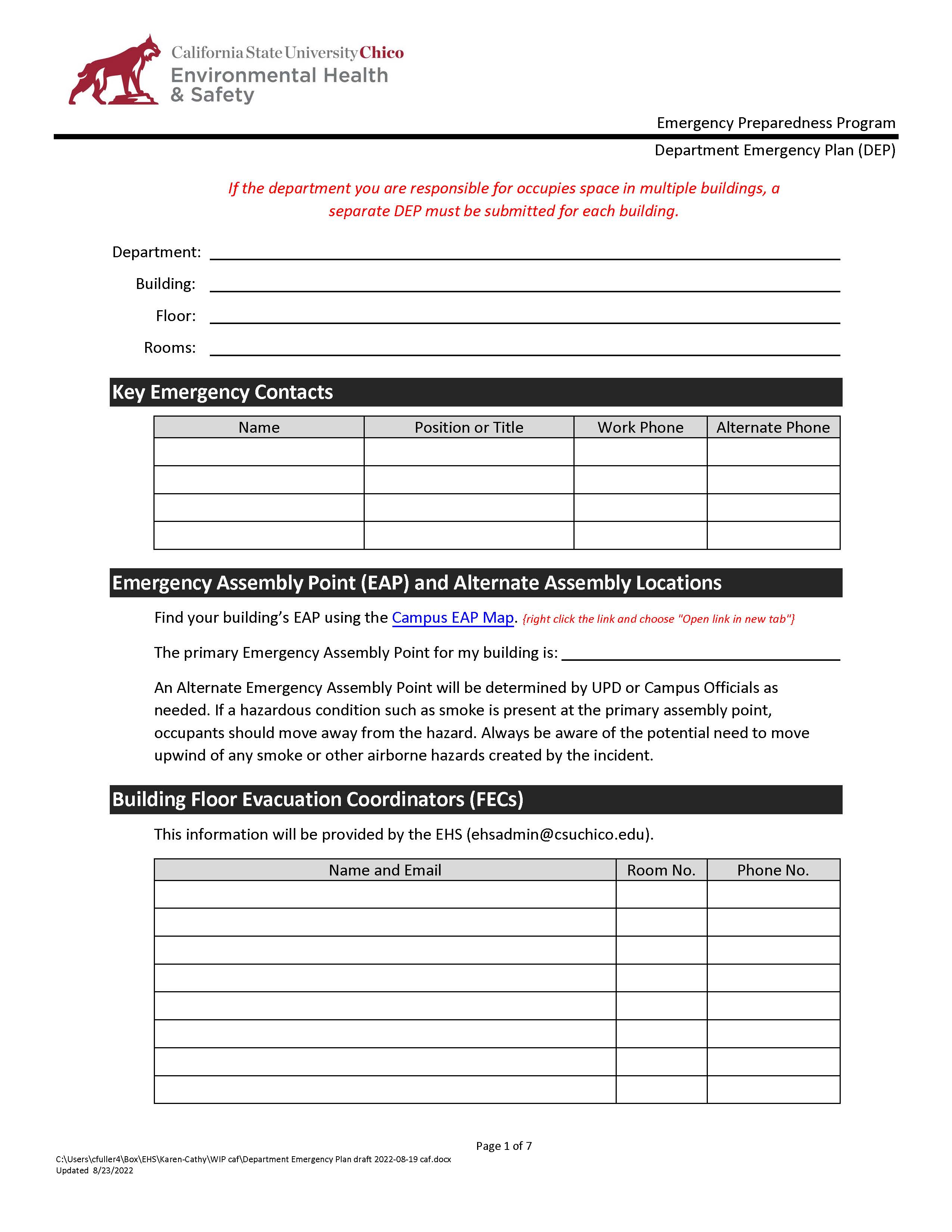
Credit: www.csuchico.edu
Frequently Asked Questions
How Do You Write An Emergency Preparedness Plan?
Write an emergency preparedness plan by identifying local risks and common emergencies. Outline evacuation routes, communication methods, and emergency contacts. Include supplies needed, roles for family or employees, and procedures for reunification. Regularly review and update the plan to ensure readiness and safety.
What Are The 5 P’s Of Preparedness?
The 5 P’s of preparedness are Proper Planning Prevents Poor Performance. They emphasize planning, preparation, practice, protection, and persistence for emergency readiness.
What To Stockpile For 72 Hours?
Stockpile water (one gallon per person daily), non-perishable food, first aid kit, flashlight, batteries, hygiene items, and important documents for 72 hours.
What Are The 5 Phases Of Emergency Preparedness?
The five phases of emergency preparedness are mitigation, preparedness, response, recovery, and prevention. Each phase helps reduce risks and manage emergencies effectively.
Conclusion
Having a clear emergency preparedness plan PDF helps you stay ready. It guides you through actions during sudden events. Keep the plan accessible and update it regularly. Share it with family or coworkers to ensure everyone knows what to do.
Simple steps today can protect lives tomorrow. Stay safe by planning ahead and practicing your plan often.