
Imagine being at work when suddenly an emergency strikes—a fire, a chemical spill, or severe weather. What would you do?
Are you confident that you and your coworkers know exactly how to stay safe? Your workplace should never be a place of uncertainty during a crisis. Emergency preparedness at work is not just about following rules; it’s about protecting your life and the lives of those around you.
You’ll discover simple, clear steps to create and follow an emergency plan that works. By the time you finish reading, you’ll feel empowered to take action and ensure your workplace is ready for anything. Don’t leave safety to chance—let’s make sure you’re prepared.

Credit: wasip.com
Hazard Assessment
Hazard assessment is the first step in workplace emergency preparedness. It helps find dangers that could cause harm. Identifying these hazards allows for creating safer work environments. Regular assessments reduce risks and prepare employees for emergencies. Understanding hazards means knowing what to watch for and how to respond.
Identify Physical Risks
Look around the workplace for physical dangers. Check for wet floors, loose wires, and blocked exits. Heavy machines and sharp tools also pose risks. Notice any areas with poor lighting or unstable structures. These risks can cause falls, cuts, or other injuries. Fixing these issues prevents many accidents.
Recognize Chemical Hazards
Chemicals in the workplace need careful attention. Identify any flammable, toxic, or corrosive substances. Check storage areas for leaks or spills. Make sure safety data sheets are available and understood. Employees should know how to handle chemicals safely. Proper labeling and protective gear reduce chemical risks.
Assess Environmental Threats
Environmental threats come from outside or natural events. These include fires, floods, earthquakes, or severe weather. Assess the workplace location for these risks. Plan how to protect workers during these events. Monitor weather alerts and have evacuation routes ready. Being aware helps reduce harm from these threats.
Emergency Scenarios
Workplaces face many types of emergencies. Preparing for each scenario improves safety and response. Knowing possible emergencies helps create clear plans and training.
Emergency scenarios vary by location and industry. Each type requires specific actions and precautions. Understanding these scenarios keeps workers ready and calm during crises.
Fire Emergencies
Fires can start from electrical faults, cooking, or flammable materials. Smoke spreads quickly and can cause injury or death. Employees must know evacuation routes and fire extinguisher use. Regular fire drills help everyone stay prepared. Clear communication during a fire saves lives.
Natural Disasters
Earthquakes, floods, tornadoes, and storms threaten many workplaces. These events may damage buildings or block exits. Workers should learn safe places to shelter inside. Emergency kits with water and supplies aid survival. Awareness of local hazards helps tailor plans effectively.
Chemical Spills
Chemical spills pose serious health risks and require quick action. Identifying hazardous substances reduces exposure and harm. Workers need training on spill containment and evacuation steps. Proper use of personal protective equipment is essential. Reporting spills promptly limits damage and injury.
Workplace Violence
Violence at work includes threats, physical attacks, or harassment. Recognizing warning signs can prevent incidents. Employees should know how to report threats safely. Establishing secure areas and lockdown procedures protects staff. Support systems help workers recover after violent events.
Emergency Procedures
Emergency procedures form the backbone of workplace safety. They ensure employees know exactly what to do during unexpected events. Clear procedures reduce confusion and speed up response times. Each workplace must have detailed plans for different emergencies.
These procedures cover how to leave the building safely, where to take shelter, and how to report issues. Regular training helps everyone remember these steps. Knowing these actions can save lives and protect property.
Evacuation Guidelines
Evacuation means leaving the building quickly and safely. Follow marked exit signs and use the nearest safe route. Avoid elevators; always use stairs during an evacuation.
Do not rush or push others. Walk calmly to the designated assembly area outside. Stay with your team and wait for further instructions. Never re-enter the building until it is declared safe.
Shelter-in-place Strategies
Shelter-in-place means staying inside and finding a safe spot. Close and lock doors and windows. Turn off ventilation systems if instructed.
Choose an interior room without windows if possible. Stay low to the ground and keep calm. Wait for official messages before leaving the shelter.
Reporting Emergencies
Quick reporting helps responders act fast. Call the emergency number or use the workplace alert system. Give clear details about the situation and location.
Notify your supervisor or safety officer immediately. Follow any instructions given by emergency personnel. Reporting accurately can save lives and reduce damage.
Roles And Responsibilities
Clear roles and responsibilities improve emergency preparedness at work. Every employee must know their duties during a crisis. This clarity helps avoid confusion and speeds up response times. Assigning specific tasks ensures critical actions happen without delay. Here is a breakdown of key roles in workplace emergencies.
Chain Of Command
The chain of command defines who leads during an emergency. This leader gives orders and coordinates actions. Clear authority prevents mixed messages and conflicts. Employees should know their direct supervisor in the chain. This structure keeps communication organized and efficient.
Key Personnel Contacts
Key personnel are individuals with special emergency roles. Their contact information must be easy to find. These people include safety officers, managers, and emergency coordinators. Quick access to their details speeds up coordination. Regular updates keep contact lists accurate.
Rescue And Medical Duties
Rescue and medical teams handle injured or trapped employees. They provide first aid and arrange for professional medical help. These roles require training and readiness. Assigned staff must know how to use emergency equipment. Their prompt action can save lives.
Shutdown Operations
Shutdown teams stop machinery and critical systems safely. This prevents accidents and limits damage during emergencies. Staff with technical knowledge perform these tasks. They follow clear procedures to ensure safety. Proper shutdown helps protect employees and property.
Communication Protocols
Clear communication is vital during emergencies at work. It ensures quick action and safety for all employees. Well-defined protocols help avoid confusion and delays. Everyone knows what to do and whom to contact.
Communication protocols cover three main areas: reaching first responders, notifying employees, and sharing information after an event. Each step plays a key role in managing emergencies effectively.
Contacting First Responders
Call emergency services immediately if danger arises. Use the fastest and most reliable method available. Have emergency numbers posted in visible places. Train staff on how to provide clear information. Include location details and the nature of the emergency. Quick contact can save lives and reduce damage.
Employee Notification Systems
Notify all employees swiftly once an emergency occurs. Use alarms, loudspeakers, or text alerts to reach everyone. The system should work even if some communication lines fail. Test notification tools regularly to ensure proper function. Clear instructions help employees respond correctly and calmly.
Post-emergency Communication
Keep employees informed after the emergency ends. Share updates about safety, next steps, and available support. Use multiple channels such as email, meetings, or notice boards. Encourage questions to reduce fear and confusion. Transparent communication helps restore normalcy and trust in the workplace.

Credit: www.savanceworkplace.com
Evacuation Planning
Evacuation planning is crucial for safety in any workplace. It prepares employees to leave the building quickly and safely during emergencies. A clear plan saves lives and reduces confusion.
Every workplace must have well-defined evacuation routes and procedures. These plans need to be simple, easy to follow, and regularly practiced. Awareness of these details helps everyone act calmly and efficiently.
Primary And Secondary Routes
Identify at least two evacuation routes from every work area. The primary route should be the fastest and safest path out. The secondary route acts as a backup if the first is blocked.
Routes must be free of obstacles and easy to access. Employees should know both routes well before an emergency happens.
Marked Exits And Assembly Areas
All exits must be clearly marked with visible signs and lights. This helps everyone find the way out, even in darkness or smoke.
Set designated assembly areas outside the building. These spots keep employees safe and allow managers to check who is accounted for.
Avoiding Elevator Use
Elevators are dangerous during emergencies, especially fires. Power failures or malfunctions can trap people inside.
Always use stairs for evacuation. Post signs near elevators to remind employees not to use them.
Assisting Vulnerable Individuals
Plan for employees who may need extra help. This includes people with disabilities, injuries, or medical conditions.
Assign buddies or helpers to assist these individuals during evacuation. Training staff to support vulnerable people improves safety for all.
Shelter-in-place Plans
Shelter-in-place plans are vital for workplace safety during emergencies. These plans help protect employees inside the building when leaving is unsafe. Knowing how and when to shelter can save lives. Proper preparation ensures everyone stays calm and secure.
When To Shelter
Shelter-in-place is necessary during chemical spills, severe weather, or active threats. Stay indoors and avoid windows. Follow instructions from emergency responders or your workplace safety team. Do not leave the building until it is safe.
Sealing Doors And Windows
Close all doors and windows tightly. Use plastic sheeting and tape to seal gaps. This prevents harmful air or chemicals from entering. Check that vents and cracks are covered. Keep the area as airtight as possible.
Ventilation Control
Turn off air conditioners, heaters, and fans. This stops outside air from circulating inside. Use building controls to shut down ventilation systems if possible. Keep fresh air intake closed until authorities say it is safe.
Training And Drills
Training and drills form the core of emergency preparedness at work. They equip employees with skills to respond quickly and safely. Practice builds confidence and reduces panic during real emergencies. Regular training and drills help identify gaps in plans and improve response strategies.
Employee Training Programs
Employee training programs teach essential emergency skills. Training covers fire safety, first aid, and evacuation procedures. Sessions use clear language and simple instructions for easy understanding. Hands-on practice helps employees remember steps better. Training boosts awareness of potential hazards at the workplace.
Regular Evacuation Drills
Regular evacuation drills prepare staff to exit safely and calmly. Drills simulate real emergencies to create a sense of urgency. They practice using primary and secondary escape routes. Employees learn to avoid elevators and gather at designated meeting points. Frequent drills ensure everyone knows their role and responsibilities.
Drill Evaluation
Drill evaluation reviews how well employees follow emergency plans. Observers note strengths and areas needing improvement. Feedback helps update training content and emergency procedures. Evaluation checks if communication systems work during drills. Continuous improvement makes workplace safety more reliable over time.
Safety Equipment
Safety equipment plays a vital role in emergency preparedness at work. It protects employees and reduces injury risks. Proper safety gear ensures quick, effective response during emergencies.
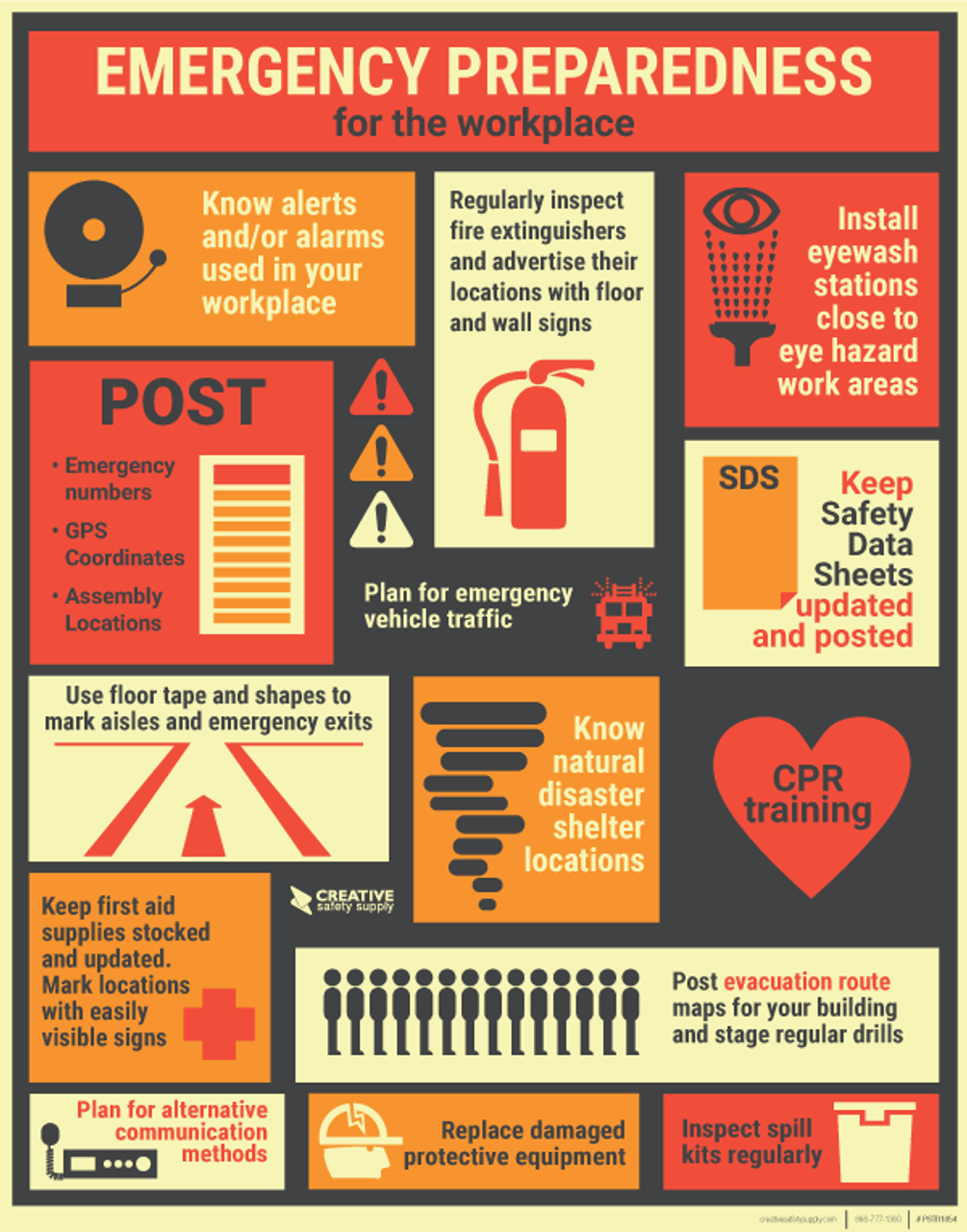
Every workplace must have the right equipment ready. Fire extinguishers, first aid kits, emergency lighting, and protective gear are essential. These tools save lives and minimize damage.
Inventory Management
Keep a detailed list of all safety equipment on site. Track quantities, locations, and expiration dates. Update the inventory regularly to prevent shortages.
Assign a responsible person to oversee inventory checks. This helps maintain readiness and ensures equipment is available when needed. Proper records support quick audits and compliance.
Regular Maintenance
Safety equipment needs routine inspections and upkeep. Check fire extinguishers for pressure and damage. Replace expired first aid supplies promptly.
Test emergency alarms and lighting systems often. Clean and repair protective gear to keep it effective. Regular maintenance extends equipment life and boosts safety.
Credit: www.creativesafetysupply.com
Plan Maintenance
Maintaining an emergency preparedness plan at work is essential for safety. A plan must stay current and effective. Regular upkeep ensures the plan works during real emergencies. This section explains how to keep your plan updated and ready.
Regular Reviews
Review the emergency plan at set intervals. Check if procedures still match workplace needs. Look for outdated information or missing steps. Testing the plan through drills can reveal weaknesses. Regular reviews keep the plan sharp and reliable.
Updating For Changes
Change is constant in any workplace. Update the emergency plan after major changes. New equipment, staff, or building layouts affect safety steps. Include updates about hazards or legal rules. Keeping the plan current protects everyone effectively.
Plan Distribution
Share the emergency plan with all employees. Make sure everyone can easily find and read it. Use emails, printed copies, or online platforms. Ensure new workers receive the plan during orientation. Proper distribution helps all staff know what to do.
Frequently Asked Questions
What Are The 5 P’s Of Preparedness?
The 5 P’s of preparedness are: Proper Planning, Prevention, Preparation, Practice, and Persistence. These ensure effective emergency readiness.
What Is The Emergency Preparedness Plan In The Workplace?
An emergency preparedness plan in the workplace identifies hazards, sets communication protocols, and outlines specific actions for fires, disasters, or violence. It assigns roles, creates evacuation routes, trains employees, conducts drills, and maintains safety equipment to ensure a swift, organized response during emergencies.
What Are The 5 Phases Of Emergency Preparedness?
The five phases of emergency preparedness are: mitigation, preparedness, response, recovery, and prevention. Each phase focuses on reducing risks, planning, acting during emergencies, restoring normalcy, and avoiding future incidents.
How Can You Best Prepare Yourself To Handle An Emergency At The Workplace?
Prepare for workplace emergencies by conducting hazard assessments and creating clear evacuation and shelter-in-place plans. Train employees regularly and practice drills. Assign roles, establish communication protocols, and maintain safety equipment. Review and update the emergency plan frequently to ensure readiness and effective response.
Conclusion
Preparing for emergencies at work protects everyone’s safety and well-being. Clear plans reduce confusion and speed up response times. Regular training keeps employees ready to act calmly and quickly. Knowing roles and procedures builds confidence during a crisis. Simple steps like hazard checks and evacuation routes save lives.
Staying informed and prepared helps workplaces face any emergency better. Safety is a shared responsibility that requires ongoing attention. Keep your workplace emergency plan updated and practiced often. Safety starts with preparation—be ready, stay safe.