
Designing a handicap bathroom layout is about creating a space that offers both comfort and independence. If you or a loved one need a bathroom that’s easy to use and safe, the right design can make all the difference.
You want wide doorways to move freely, a curbless shower that eliminates tripping risks, and fixtures placed just right—like a higher toilet and a sink with space underneath for wheelchair access. You’ll discover practical tips and essential features that turn any bathroom into a welcoming, accessible space tailored to your needs.
Ready to transform your bathroom into a safe and stylish haven? Keep reading to find out how.
Doorways And Entry
The doorway and entry area set the tone for an accessible bathroom. This space must allow easy movement for all users. Careful design helps avoid barriers at the entrance. Safety and comfort start here.
Wide Doorways
Wide doorways are essential for wheelchair access. They provide enough space to enter and exit without difficulty. A minimum width of 32 inches is recommended. Wider openings, like 36 inches, offer more comfort. Wide doors also help users with walkers or crutches.
Non-slip Flooring
Non-slip flooring prevents falls in the entry area. Materials like textured tiles or slip-resistant vinyl work well. These surfaces keep feet steady even when wet. Safety improves for people with balance issues or limited mobility. Choose flooring that is easy to clean and maintain.
Curbless Entry
A curbless entry removes the step into the bathroom. It creates a smooth transition from one room to another. This design is easier for wheelchairs and walkers to cross. It also lowers trip risks for everyone. A gentle slope can replace a curb for drainage.
Credit: www.rethinkaccess.com
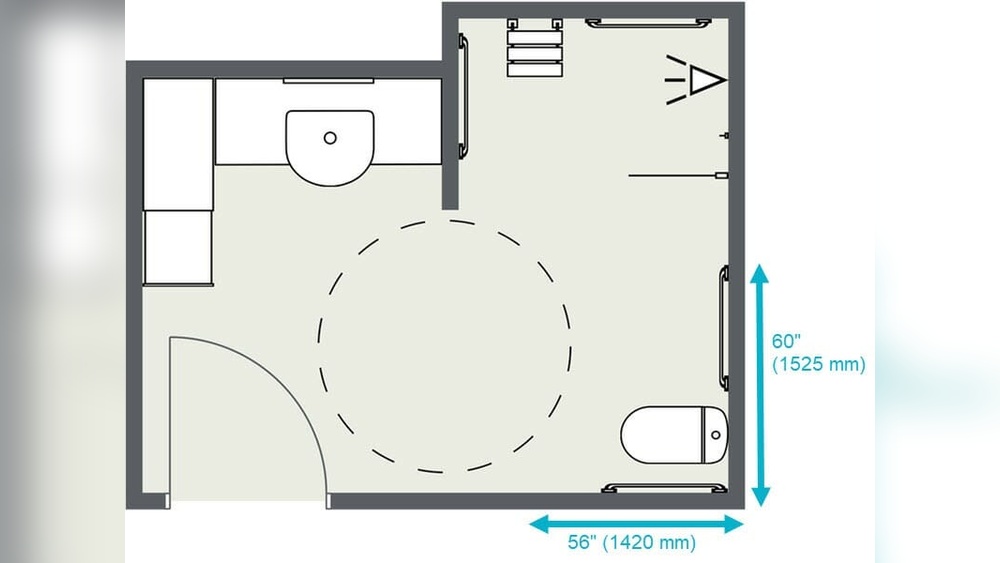
Turning Radius
The shower and bathtub area plays a key role in a handicap bathroom layout design. Safety and ease of use are top priorities. Proper design helps users move freely and reduces accident risks. Thoughtful features make bathing comfortable and independent.
Curbless Or Roll-in Showers
Curbless showers have no step or lip, allowing easy access. Roll-in showers are wide and smooth for wheelchairs. These designs prevent tripping hazards and improve mobility. They also simplify cleaning and maintenance.
Shower Controls
Shower controls should be easy to reach and use. Lever handles work better than knobs for limited hand strength. Controls placed low and within arm’s reach increase independence. Clear markings help users adjust temperature safely.
Grab Bars Placement
Grab bars provide essential support in showers and tubs. Place bars horizontally and vertically near entry points and seating areas. Secure bars help users balance and move safely. Use non-slip materials for extra security.
Accessible Accessories
Accessible accessories improve convenience in the shower and bathtub area. Include handheld showerheads with adjustable height. Use non-slip mats and seats designed for stability. Keep soap dishes and shelves within easy reach.
Shower And Bathtub
The toilet design is a key part of a handicap bathroom layout. It must offer comfort and safety. Simple changes improve usability for people with disabilities. Thoughtful design helps users maintain independence and dignity.
Each element of the toilet area must meet accessibility standards. This includes toilet height, support features, and space around the toilet. These features make the bathroom easier to use and safer.
Higher Toilets
Higher toilets are easier to use for many people. They reduce strain on knees and hips. Standard toilets are often too low for some users. A height of 17 to 19 inches is ideal for accessibility. This height helps users sit down and stand up with less effort.
Grab Bars Around Toilet
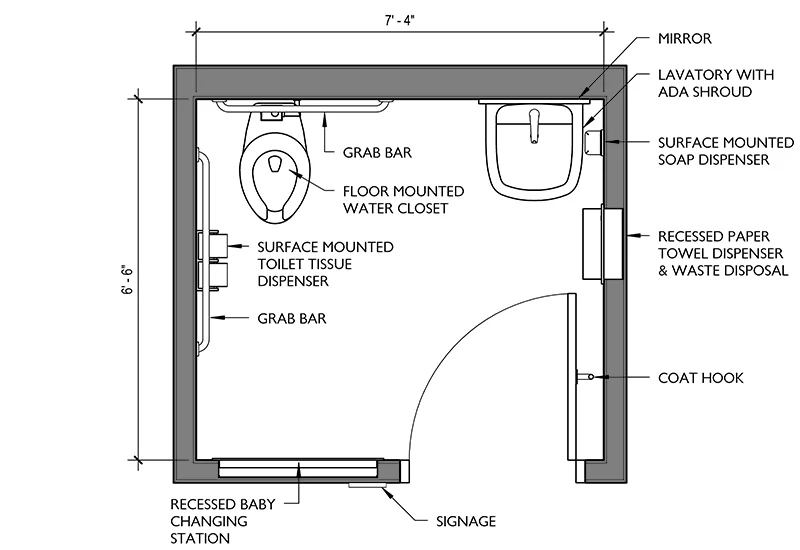
Grab bars provide essential support near the toilet. They prevent falls and help users balance. Bars must be securely mounted on walls. Placing them on both sides of the toilet is best. Users can move safely and confidently with grab bars in place.
Clearance Space
Clearance space around the toilet allows for wheelchair access. A space at least 60 inches wide is recommended. This space helps users maneuver easily and comfortably. Enough room also assists caregivers in providing help if needed. Planning clearance space is crucial for a functional bathroom layout.

Credit: www.roomsketcher.com
Toilet Design
Safety is the top priority in any handicap bathroom layout design. Bathrooms can be risky spaces due to wet floors and tight spaces. Proper safety features reduce accidents and provide peace of mind. These features help users move confidently and independently.
Anti-slip Mats
Anti-slip mats prevent slips on wet bathroom floors. They provide strong grip even when wet. Mats should be placed near the shower, bathtub, and sink areas. Choose mats with quick-dry materials to avoid mold and mildew. Anti-slip mats improve stability for wheelchair users and those with limited mobility.
Emergency Call Systems
Emergency call systems offer quick help in case of falls or accidents. They usually include pull cords or buttons within easy reach. These systems connect directly to caregivers or emergency services. Installing them near the toilet and shower ensures fast access. Emergency call systems increase safety and user confidence.
Rounded Edges
Rounded edges on bathroom fixtures reduce injury risk from bumps. Sharp corners can cause cuts or bruises during movement. Rounded edges are essential on countertops, sinks, and grab bars. This design feature creates a safer environment for all users. Smooth edges also contribute to a modern and clean look.
Sink And Vanity
Choosing the right materials and finishes is key for a handicap bathroom layout design. They impact safety, durability, and ease of use. These elements must handle daily wear and resist moisture. They also should be easy to clean to maintain hygiene. Thoughtful selection improves comfort and accessibility for all users.
Durable Surfaces
Durable surfaces withstand heavy use without damage. Materials like solid surface countertops, quartz, and porcelain tiles offer strength. They resist scratches and dents, keeping the bathroom looking new. Durable floors reduce the risk of cracks that can cause trips. Strong surfaces support grab bars and fixtures safely.
Moisture-resistant Materials
Bathrooms are wet environments, so moisture resistance is crucial. Waterproof wall panels, vinyl flooring, and sealed grout prevent water damage. Moisture-resistant materials stop mold and mildew growth. They protect walls and floors from warping or swelling. These materials maintain structural integrity over time.
Easy-to-clean Finishes
Easy-to-clean finishes reduce maintenance effort and improve hygiene. Smooth surfaces without deep grooves prevent dirt buildup. Glossy paints and sealed tiles allow quick wiping. Anti-microbial coatings add extra protection against germs. Clean finishes keep the bathroom safe and fresh for all users.

Credit: www.roomsketcher.com
Frequently Asked Questions
How To Design A Bathroom For A Disabled Person?
Design a bathroom for a disabled person by ensuring wide doorways and a 5-foot turning radius. Use non-slip flooring and a curbless walk-in shower with grab bars. Install a handheld showerhead, higher toilet, and sink with clear space underneath for wheelchair access.
What Is The Golden Rule For Bathroom Layouts?
The golden rule for bathroom layouts ensures accessibility by providing wide doorways, a clear turning radius, non-slip flooring, and fixtures like higher toilets and grab bars. Prioritize a curbless shower with a handheld showerhead and enough space under sinks for wheelchair access.
How To Design An Ada Compliant Bathroom?
Design an ADA compliant bathroom with wide doorways, a curbless shower, grab bars, handheld showerhead, higher toilet, and clear sink space. Ensure a non-slip floor and a 60-inch turning radius for wheelchair access. Use accessible fixtures for ease of use and safety.
What Does An Ada Compliant Bathroom Look Like?
An ADA compliant bathroom features wide doorways, a curbless shower with grab bars, a handheld showerhead, higher toilet, and clear space under the sink. It ensures a non-slip floor and enough turning radius for wheelchair access. Fixtures are designed for easy reach and use.
Conclusion
A well-planned handicap bathroom layout improves safety and comfort. It allows easy movement and access for everyone. Simple design choices make a big difference daily. Prioritize space, support bars, and accessible fixtures. Thoughtful layouts help users feel independent and secure.
Always follow guidelines to meet accessibility standards. This creates a welcoming bathroom for all abilities.