
Have you ever wondered what makes your smoke detector so reliable in keeping you safe? The secret lies in tiny particles called alpha particles.
These invisible heroes play a crucial role in detecting smoke before it becomes dangerous. You’ll discover how alpha particles work inside your smoke detector, why they’re essential, and how they help protect you and your loved ones every day. Keep reading to uncover the fascinating science behind this life-saving device.
Credit: www.savemyexams.com
Role Of Alpha Particles
Alpha particles play a key role in smoke detectors. They help detect smoke early and save lives. These tiny particles work inside the detector to sense changes in the air. Understanding their role helps explain how smoke detectors keep us safe.
Properties Of Alpha Particles
Alpha particles are made of two protons and two neutrons. They are heavy and carry a positive charge. Their size is much bigger than other radiation particles. Because of their weight, they move slowly through the air. Alpha particles cannot travel far and stop quickly.
Interaction With Air Molecules
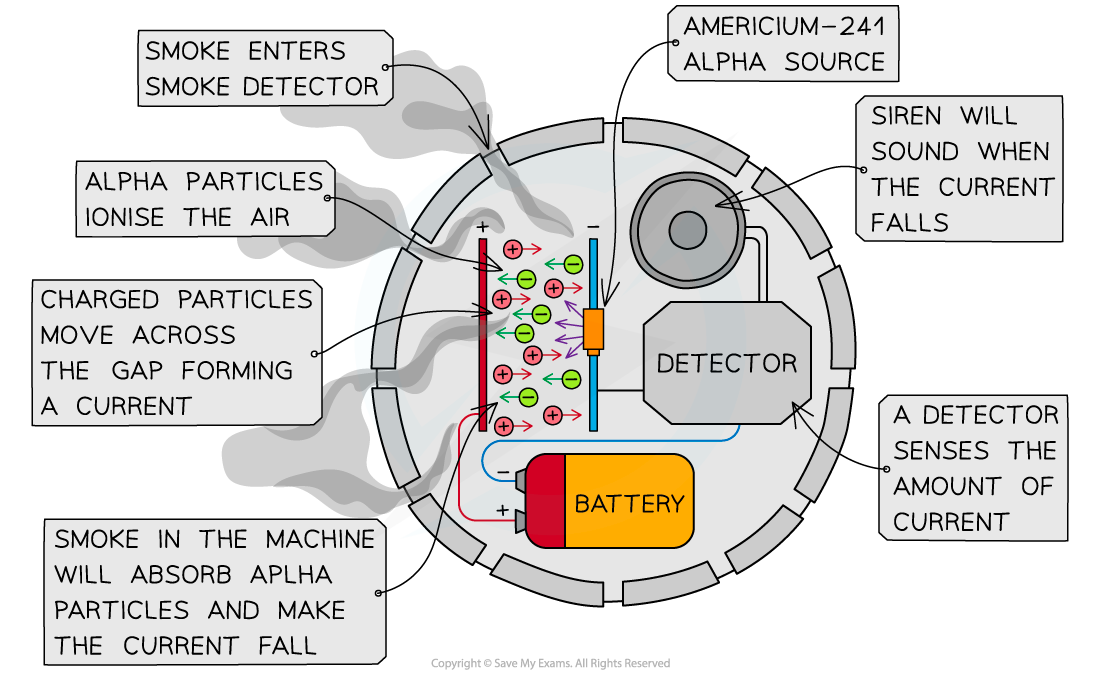
Alpha particles collide with air molecules inside the detector. These collisions create ions, which are charged particles. The ions help produce a small electric current. When smoke enters, it blocks these particles. This lowers the current and triggers the alarm. This simple process helps detect fires early.
Smoke Detector Mechanism
Smoke detectors keep us safe by sensing smoke early. They use a small amount of radioactive material that releases alpha particles. These particles play a key role in detecting smoke. The detector has a special chamber that helps it notice changes in the air caused by smoke.
Inside the chamber, the air stays charged with ions. When smoke enters, it changes this charge. The detector senses this change and sets off an alarm. This simple but smart design helps warn people about fire quickly.
Ionization Chamber Design
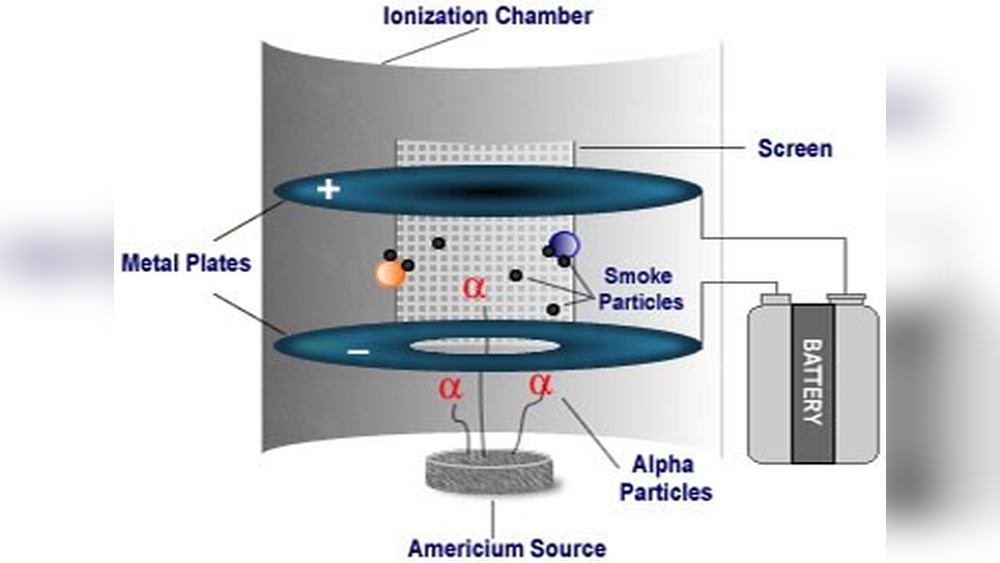
The ionization chamber is the heart of the smoke detector. It is a small space with two metal plates. A voltage runs between these plates, creating an electric field. Air fills the chamber, allowing ions to move freely.
Alpha particles come from a tiny radioactive source inside the chamber. These particles ionize the air, meaning they knock electrons off air molecules. This action creates ions that carry electric current. The detector monitors this current to spot smoke.
Alpha Particle Ionization Process
Alpha particles are heavy and positively charged. They collide with air molecules, causing ionization. This process produces positive ions and free electrons. These charged particles help keep a steady current between the plates.
When smoke enters the chamber, it sticks to the ions. This reduces the number of charged particles. The current drops, signaling smoke’s presence. The detector then triggers the alarm to warn people.
Detecting Smoke Particles
Smoke detectors use alpha particles to find smoke in the air. These tiny particles help spot smoke early. This quick detection can save lives and protect homes. Understanding how smoke particles are detected explains the power of alpha particles in these devices.
Impact On Ionization Current
Inside the smoke detector, alpha particles ionize air molecules. This creates a small flow of electric current called ionization current. When smoke enters the detector, it blocks some ions. This reduces the ionization current quickly. The change in current signals the presence of smoke.
Triggering The Alarm
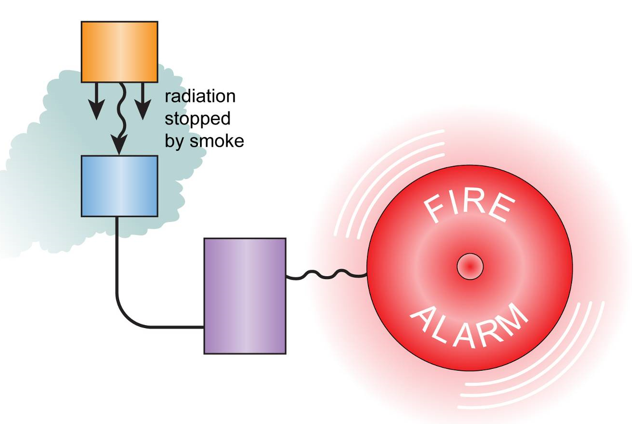
When the ionization current drops, the detector reacts fast. It sends a signal to trigger the alarm sound. This loud noise warns people about fire danger. The use of alpha particles makes this process fast and reliable. It ensures safety by alerting occupants early.
Credit: sherpa-online.com
Safety Measures In Design
Safety is the top priority in designing smoke detectors with alpha particles. These devices use tiny amounts of radioactive material. Proper design keeps people safe from any radiation risk.
Designers use special methods to control exposure. These methods ensure the alpha particles only serve their purpose. The following sections explain how safety is built into smoke detectors.
Shielding Of Radioactive Source
The radioactive source is sealed inside a metal chamber. This chamber blocks all harmful radiation from escaping. Alpha particles cannot travel far outside the detector. The shielding keeps radiation contained at all times.
Special materials like gold or stainless steel often cover the source. These materials are dense and stop radiation effectively. The sealed design prevents leaks and protects users.
Minimal Radiation Exposure
Smoke detectors use very small amounts of radioactive material. This tiny amount limits radiation to safe levels. The alpha particles only interact inside the detector’s chamber.
The device’s design keeps radiation exposure far below safety limits. Even if you handle the detector, the radiation is too low to harm. This minimal exposure makes alpha particle detectors safe for home use.
Advantages Of Alpha Particles
Alpha particles offer unique benefits in smoke detectors. Their properties make smoke detection faster and more accurate. These advantages help keep homes and buildings safer.
High Ionization Efficiency
Alpha particles ionize air molecules very effectively. This creates a steady flow of ions inside the detector. When smoke enters, it disrupts this flow. The detector senses this change quickly. This high ionization helps the device react fast to smoke.
Reliability In Early Detection
Alpha particles provide consistent and reliable signals. They help detect small amounts of smoke early. This early warning can save lives and reduce damage. The stable signals mean fewer false alarms. This reliability makes alpha particle detectors trusted in many places.
Regulations And Standards
Alpha particles play a key role in smoke detectors. Their use is carefully controlled by strict rules. These rules keep people safe and the environment protected. Understanding these rules helps explain how smoke detectors stay reliable and safe.
Radioactive Material Handling
Smoke detectors use a small amount of americium-241. This is a radioactive material that emits alpha particles. Handling this material requires special care. Workers must follow safety steps to avoid exposure. Facilities use secure containers to store and transport it. Training ensures everyone knows the correct safety methods. Proper handling limits any risk to people and the environment.
Compliance Requirements
Smoke detectors must meet national and international rules. These rules cover the amount of radioactive material allowed. They also set limits on radiation levels. Manufacturers must test their products regularly. They submit reports to government agencies. These agencies inspect factories and products. Certification shows a smoke detector meets all safety standards. This process helps maintain public trust in smoke alarm safety.

Credit: www.youtube.com
Frequently Asked Questions
How Do Alpha Particles Detect Smoke In Detectors?
Alpha particles ionize air inside the detector, creating ions. Smoke disrupts this ionization, reducing current flow. The detector senses this drop and triggers the alarm.
Why Are Alpha Particles Preferred In Smoke Detectors?
Alpha particles have low penetration power but high ionization ability. This makes them safe and effective for detecting smoke particles in the detector chamber.
What Material Emits Alpha Particles In Smoke Detectors?
Americium-241, a radioactive element, emits alpha particles. It is used in small amounts inside smoke detectors to ionize air for smoke detection.
Are Alpha Particles Harmful In Smoke Detectors?
No, alpha particles in detectors are contained safely. They cannot penetrate the detector casing or human skin, making them safe for home use.
Conclusion
Alpha particles play a key role in smoke detectors. They help sense smoke quickly and alert you early. This small but powerful process keeps homes safe every day. Smoke detectors use science in a simple, smart way. Understanding this helps us appreciate how safety devices work.
Always keep your smoke detector ready and working well. Safety starts with knowing how things protect us.