
Have you ever wondered how far apart smoke detectors should be in your home? Placing them too close or too far apart can put your safety at risk without you even realizing it.
Getting the spacing right is one of the simplest ways to protect your loved ones and property from fire hazards. You’ll discover the exact guidelines for spacing smoke detectors, why it matters, and easy tips to keep your home fully covered.
Keep reading to make sure your smoke alarms work perfectly when you need them most.

Credit: www.youtube.com
Smoke Detector Placement Basics
Proper smoke detector placement saves lives. Understanding where and how to install smoke detectors is essential. Correct placement ensures early fire detection and gives more time to react. This section covers the basics of placing smoke detectors in your home.
Ideal Locations
Place smoke detectors in every bedroom and outside each sleeping area. Install one on every floor, including the basement. Hallways and living rooms also need detectors. Avoid areas with high humidity like bathrooms. These spots reduce false alarms and improve safety.
Ceiling Vs Wall Mounting
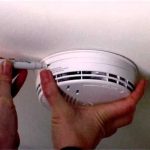
Ceilings are the best place for smoke detectors. Smoke rises, so ceiling-mounted detectors catch smoke faster. If ceiling mounting is impossible, place the detector on the wall. Mount it 4 to 12 inches below the ceiling. This keeps it in the smoke’s path for quick detection.
Distance From Cooking Appliances
Keep smoke detectors at least 10 feet away from cooking appliances. Cooking smoke often triggers false alarms. This distance reduces unwanted alerts while still protecting your kitchen area. Use heat alarms near stoves if needed for extra safety.
Credit: support.firstalert.com
Recommended Distances Between Detectors
Smoke detectors save lives by warning early of fire. Proper placement is key for full protection. Knowing the right distance between detectors helps cover all areas safely. This guide explains recommended spacing in different home parts.
Spacing In Bedrooms And Hallways
Place smoke detectors inside each bedroom. Also, install detectors in hallways outside bedrooms. Keep detectors at least 10 feet apart. This stops one detector from missing smoke in a nearby room. Proper spacing ensures quick alerts during nighttime fires.
Coverage For Larger Rooms
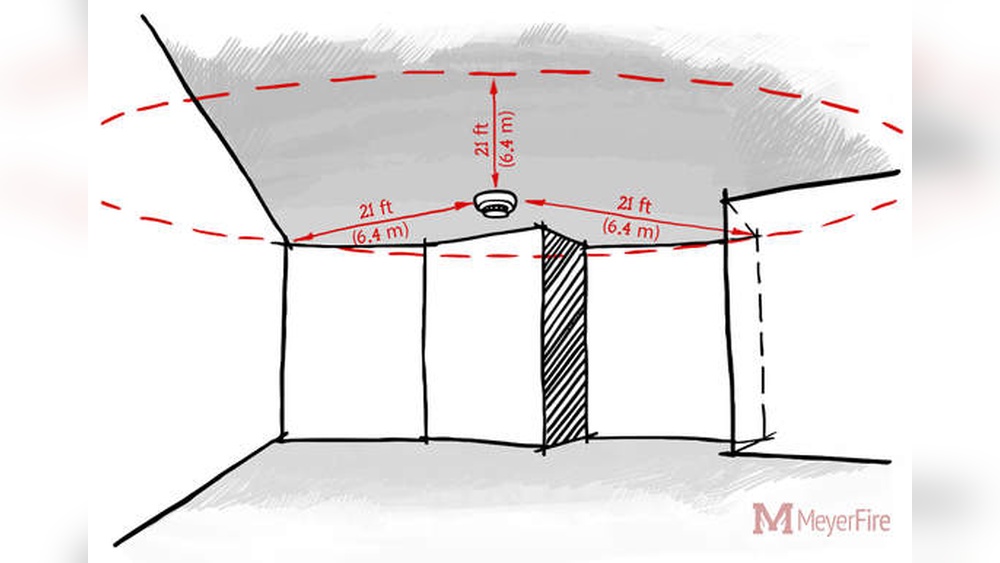
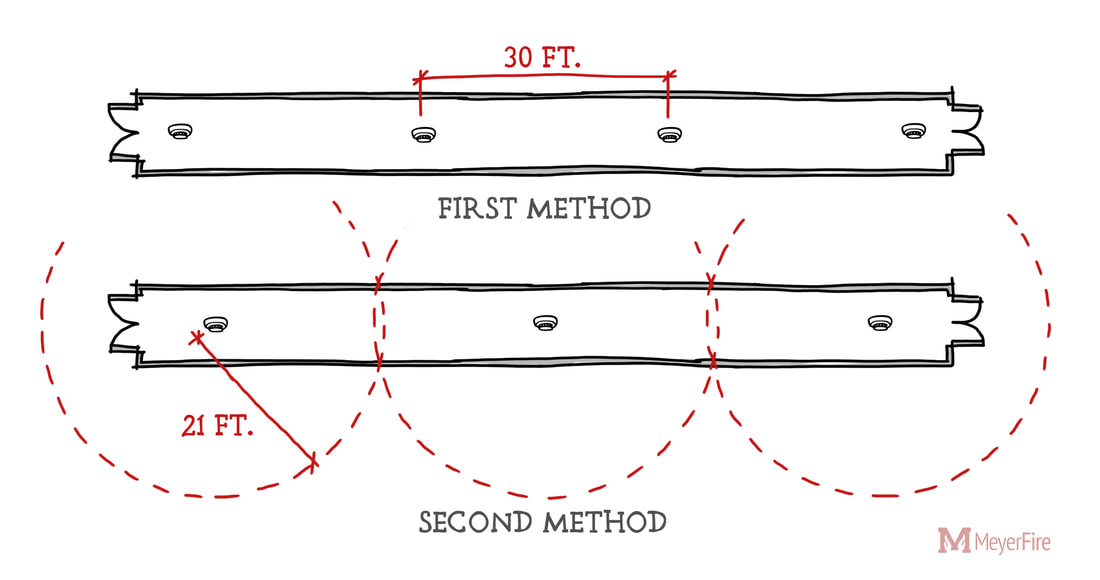
Large rooms need more than one detector. Install detectors every 30 feet in big spaces. This covers all corners and reduces blind spots. For rooms over 1,000 square feet, use multiple alarms. Proper coverage keeps everyone safer inside wide rooms.
Multi-level Home Considerations
Install at least one smoke detector on every floor. Place detectors near stairs to catch smoke rising between levels. Avoid placing detectors too close to kitchens or bathrooms. Proper floor coverage ensures early warning no matter where fire starts.
Special Situations For Placement
Special situations need careful thought for smoke detector placement. These spots can affect how well the alarms work. Different areas have unique challenges. Proper placement keeps your home safe and reduces false alarms.
Basements And Attics
Basements and attics often have less air flow. Smoke can take longer to reach detectors here. Place smoke alarms near the stairs or exit routes. Avoid corners where air moves slowly. Make sure detectors are on the ceiling or high on walls.
Near Heating Sources
Heat sources like furnaces or fireplaces create warm air that rises quickly. Keep smoke detectors at least 3 feet away from these heat sources. This prevents false alarms caused by dust or heat. Proper distance helps the alarm sense real smoke better.
Avoiding False Alarms
False alarms can cause frustration and lead to ignoring real dangers. Avoid placing detectors in kitchens or bathrooms where steam or cooking smoke is common. Use photoelectric smoke alarms in these areas for fewer false alerts. Position detectors away from windows or fans that blow dust or insects.
Credit: www.meyerfire.com
Types Of Smoke Detectors And Their Impact
Smoke detectors are vital for home safety. Different types detect smoke in unique ways. Choosing the right type affects placement and distance between units. Understanding these differences helps you protect your home better.
Each smoke detector type reacts differently to fire conditions. This impacts how far apart detectors should be installed. Proper spacing ensures early warnings and reduces false alarms.
Ionization Vs Photoelectric
Ionization detectors sense fast, flaming fires. They detect small smoke particles quickly. Photoelectric detectors spot slow, smoldering fires better. These create larger smoke particles. Both types have strengths and weaknesses. Many experts recommend using both types together for full coverage.
Combination Detectors
Combination detectors include both ionization and photoelectric sensors. They offer wider detection for all fire types. This reduces the need for multiple separate units. Combination detectors can influence how far apart you place devices. They provide balanced protection in one device.
Interconnected Systems
Interconnected smoke detectors link all units in a home. When one detects smoke, all alarms sound. This system increases warning time for everyone inside. Interconnected detectors allow flexible spacing rules. They improve safety by alerting all rooms simultaneously.
Installation And Maintenance Tips
Proper installation and regular maintenance keep smoke detectors working well. These steps help protect your home and family from fire dangers. Follow simple tips to make sure your detectors stay ready to alert you quickly.
Testing Frequency
Test smoke detectors once every month. Press the test button until the alarm sounds. This check confirms the battery and sensor work correctly. Mark the test date on a calendar to remember each month.
Battery Replacement
Replace batteries at least once a year. Use fresh batteries recommended by the manufacturer. If your alarm beeps often, change the battery right away. Some models have sealed batteries that last ten years.
Cleaning And Upkeep
Dust and dirt can block smoke sensors. Clean detectors gently with a soft brush or vacuum. Avoid using water or cleaners. Replace detectors every 10 years or as advised by the maker.
Legal Requirements And Safety Standards
Smoke detectors save lives by giving early warnings of fire. Legal rules and safety standards guide how far apart these devices should be. Following these rules helps protect your home and family.
Local Building Codes
Local building codes set specific rules for smoke detector placement. These rules vary by city or state. Most require smoke detectors in bedrooms, hallways, and living areas. The distance between detectors depends on the size and layout of the home. Always check your local codes before installation.
National Fire Protection Association Guidelines
The National Fire Protection Association (NFPA) offers widely accepted smoke detector rules. NFPA 72 recommends installing detectors inside every bedroom and outside sleeping areas. They suggest placing detectors at least 10 feet apart. Following NFPA guidelines helps ensure timely fire alerts and safety.
Insurance Implications
Insurance companies often require smoke detectors to meet legal and safety standards. Properly spaced detectors may lower your insurance premiums. Lack of compliance can lead to denied claims after a fire. Installing smoke detectors according to rules protects your home and finances.
Frequently Asked Questions
How Far Apart Should Smoke Detectors Be Installed?
Smoke detectors should be installed at least 10 to 12 feet apart. This spacing ensures optimal smoke detection and early fire alerts for safety.
Why Is Correct Smoke Detector Spacing Important?
Proper spacing ensures smoke detectors cover the entire area. It reduces blind spots, improving early fire detection and increasing home safety.
Can Too Close Smoke Detectors Cause False Alarms?
Yes, placing smoke detectors too close can trigger false alarms. Proper spacing prevents this and ensures accurate smoke detection.
How Many Smoke Detectors Are Needed Per Room?
Typically, one smoke detector is enough per room. Larger rooms may require multiple detectors spaced correctly for full coverage.
Conclusion
Proper placement of smoke detectors saves lives and property. Keep them at least 10 feet apart for best coverage. Test detectors monthly to ensure they work well. Replace batteries once a year or as needed. Remember, early warning gives you time to act fast.
Stay safe by following these simple rules. Your home and family deserve the best protection. Don’t wait until it’s too late.