
Have you ever wondered how smoke detectors keep you safe from fire? The secret lies in something called alpha radiation.
It might sound complicated, but understanding how your smoke detector works can give you peace of mind. This small device uses a smart science trick to spot danger early and alert you before it’s too late. Keep reading to discover how alpha radiation plays a key role in protecting your home and loved ones every day.

Credit: www.youtube.com
Basics Of Smoke Detectors
Smoke detectors keep homes and buildings safe from fire. They sense smoke early. This helps people act fast. Understanding how smoke detectors work is important. It shows why they are reliable safety tools.
Smoke detectors come in different types. Each type uses a unique method to detect smoke. They all have key parts that work together. These parts help the device sense smoke and alert you.
Types Of Smoke Detectors
Two main types of smoke detectors are ionization and photoelectric. Ionization detectors use a tiny amount of radioactive material. This material helps detect small smoke particles. They react quickly to fast flaming fires.
Photoelectric detectors use a light beam. Smoke blocks the light, triggering the alarm. They work best with slow, smoldering fires. Some detectors combine both methods for better safety.
Key Components
All smoke detectors have a sensor, power source, and alarm. The sensor detects smoke particles. The power source usually is a battery or home wiring. The alarm sounds loudly to warn people.
Ionization detectors contain a small amount of alpha radiation. This radiation helps detect smoke by ionizing air inside the sensor. It is safe and sealed inside the detector. Together, these parts keep you safe from fire.
Credit: www.savemyexams.com
Role Of Alpha Radiation
Alpha radiation plays a key role in many smoke detectors. It helps the device sense smoke quickly. This early detection can save lives and property. Understanding alpha radiation clarifies how these detectors work.
What Is Alpha Radiation?
Alpha radiation comes from unstable atoms. These atoms release small particles called alpha particles. Each alpha particle has two protons and two neutrons. These particles carry a positive charge. They cannot travel far and stop easily.
Alpha particles are strong but slow. They cannot pass through solid objects like paper or skin. This makes alpha radiation safe inside smoke detectors. The radiation ionizes air particles inside the detector chamber.
How Alpha Particles Detect Smoke
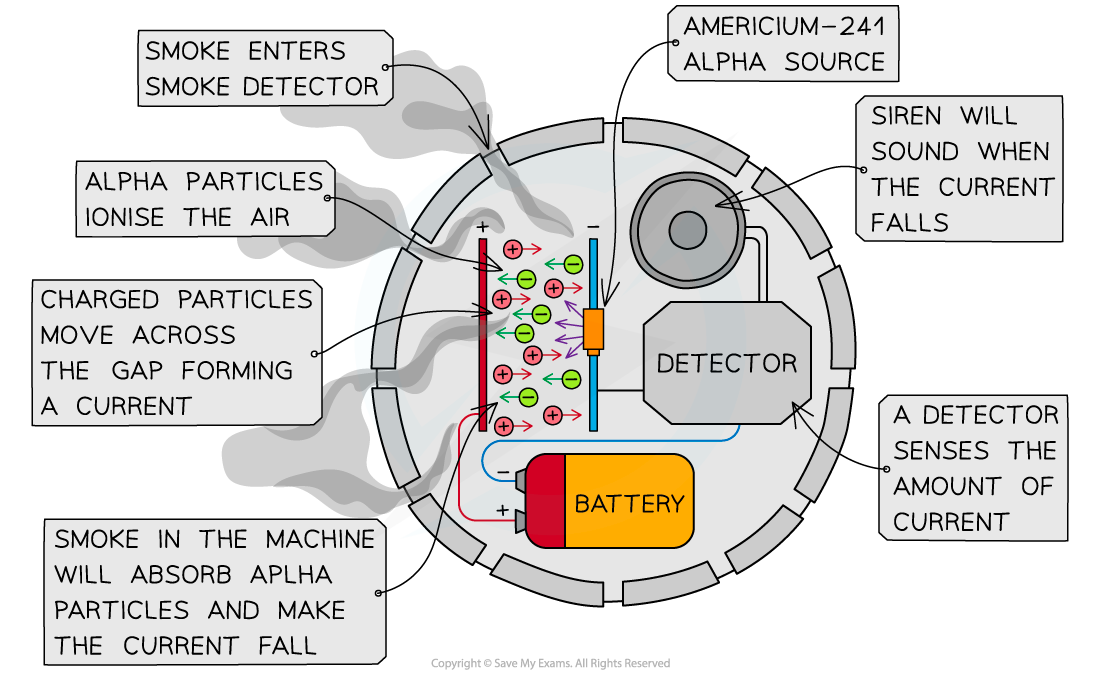
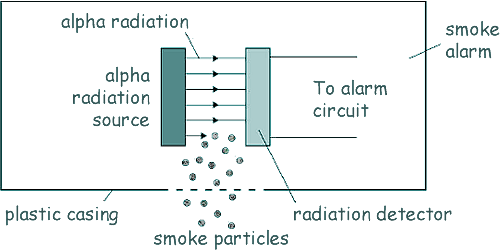
Inside a smoke detector, alpha particles ionize the air. This creates a small electric current between two electrodes. When smoke enters, it disrupts this current. Smoke particles attach to ions and reduce ion flow.
The detector senses this drop in current. It triggers the alarm to warn about smoke. The process happens very fast. Alpha particles make smoke detectors sensitive and reliable.
Ionization Process Inside Detectors
The ionization process inside smoke detectors is key to their function. These detectors use a small amount of alpha radiation to keep air inside a chamber charged. This process helps detect smoke quickly and alert people to danger. Understanding this process shows how these life-saving devices work silently and efficiently.
Ionization Chamber Explained
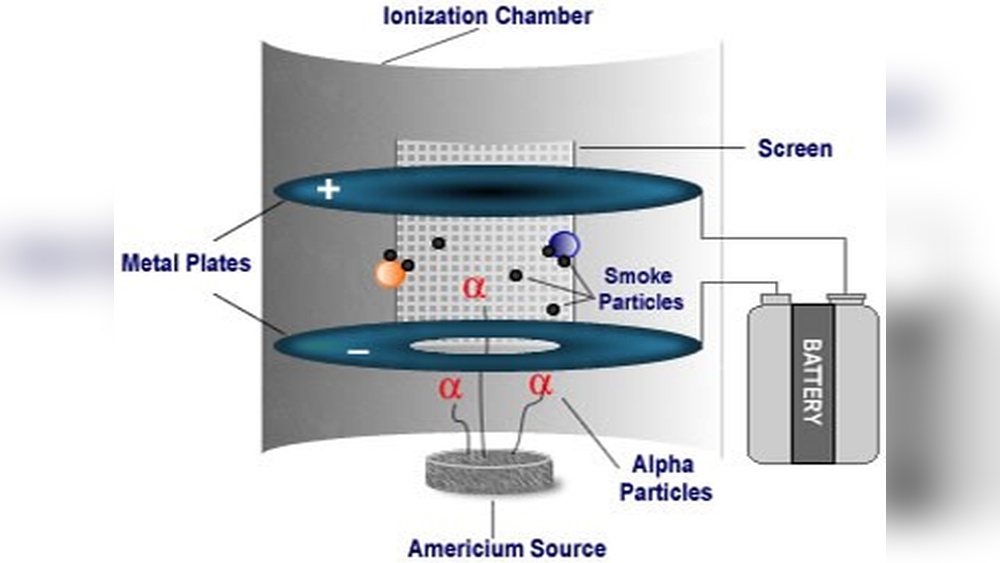
The ionization chamber is a small space inside the smoke detector. It contains two plates with a small electric current running between them. A tiny source of alpha radiation ionizes the air molecules here. This means the radiation knocks electrons off air molecules, creating ions. These ions carry the electric current between the plates, keeping the current steady.
Impact Of Smoke On Ionization
When smoke enters the ionization chamber, it disrupts the ionization process. Smoke particles attach to the ions and reduce their movement. This lowers the electric current flowing between the plates. The detector senses this drop in current and triggers the alarm. This quick reaction helps warn people about smoke and fire early.
Advantages Of Using Alpha Radiation
Alpha radiation plays a key role in smoke detectors. It offers several benefits that improve safety and performance. These advantages make alpha radiation a popular choice in many smoke detection devices.
Sensitivity And Reliability
Alpha radiation is very sensitive to smoke particles. It detects even small amounts of smoke quickly. This sensitivity helps alert people early during a fire. The reliability of alpha radiation keeps detectors working well over time. It rarely gives false alarms, which builds trust in the device.
Low Power Consumption
Smoke detectors using alpha radiation need very little power. This low energy use helps batteries last longer. It also allows detectors to work in places without constant power supply. The low power consumption makes these detectors cost-effective and easy to maintain.
Safety And Environmental Concerns
Smoke detectors using alpha radiation have safety and environmental concerns. They contain a small amount of radioactive material. This raises questions about safe use and disposal. Understanding these concerns helps keep people and the environment safe.
Radioactive Material Safety
Alpha radiation in smoke detectors comes from americium-241. The amount is very small and sealed inside the device. It cannot escape under normal use. The radiation cannot travel far and is blocked by the detector casing.
Handling smoke detectors carefully is important. Do not open or tamper with the device. Avoid breaking the small radioactive source inside. If damaged, the radioactive material could be exposed, which is harmful.
Disposal And Recycling
Smoke detectors with radioactive parts should not be thrown in regular trash. Special disposal methods prevent radiation release into the environment. Many places have recycling programs for these detectors.
Return old smoke detectors to the manufacturer or local disposal centers. They follow rules to manage radioactive waste safely. This helps protect people and nature from contamination.
Maintenance And Testing
Maintaining and testing smoke detectors that use alpha radiation is essential for safety. These devices need regular checks to ensure they work correctly. Proper maintenance helps avoid false alarms and keeps your home safe from fire risks. Simple tests and cleaning can extend the life of your smoke detector.
Ensuring Proper Function
Test your smoke detector monthly by pressing the test button. The alarm should sound loud and clear. Replace batteries at least once a year or when the detector signals low power. Clean the detector gently with a soft brush or vacuum to remove dust. Dust can block the sensor and stop it from detecting smoke. Keep detectors away from steam and strong air currents. These can cause false alarms or stop the detector from working.
Common Issues And Fixes
Detectors may beep due to weak batteries or dirt. Replace batteries immediately if you hear beeping. Clean the unit to remove dust and debris. If the alarm does not sound during the test, replace the detector. Smoke detectors have a lifespan of about 10 years. Old detectors may fail and need replacement. Avoid painting or covering the detector. This can block the sensor and stop it from working properly.
Future Developments In Smoke Detection
Smoke detectors save lives by alerting people to fire early. Their technology must keep improving. Future developments in smoke detection promise better safety and smarter systems. Innovations focus on faster detection and fewer false alarms. Researchers work on safer materials and more sensitive sensors. These changes aim to protect homes and businesses more effectively.
Technological Innovations
New sensors use advanced materials to detect smoke faster. Some devices combine multiple sensors for better accuracy. Smart smoke detectors connect to phones for instant alerts. Machine learning helps devices distinguish real fire from cooking smoke. Battery life is improving, reducing the need for frequent changes. These tech upgrades make smoke detection more reliable and user-friendly.
Alternatives To Alpha Radiation
Traditional smoke detectors often use alpha radiation to sense smoke. Safety concerns push researchers to find new options. Optical and photoelectric sensors gain popularity as safer choices. These sensors use light to detect smoke particles quickly. Other methods include ionization without radioactive materials. New alternatives reduce health risks and meet stricter regulations.
Credit: www.cyberphysics.co.uk
Frequently Asked Questions
How Do Smoke Detectors Use Alpha Radiation?
Smoke detectors use alpha radiation from Americium-241. The radiation ionizes air, creating a current. Smoke disrupts this current, triggering the alarm.
Why Is Alpha Radiation Safe In Smoke Detectors?
Alpha particles cannot penetrate detector casing or skin. The radiation source is sealed securely inside. This makes the device safe for home use.
What Role Does Ionization Play In Smoke Detection?
Ionization creates charged particles in the detector chamber. This allows current to flow continuously. Smoke particles interrupt ionization, setting off the alarm.
Can Alpha Radiation Detectors Sense All Types Of Smoke?
Ionization smoke detectors detect fast, flaming fires well. They are less sensitive to smoldering fires. Combining with photoelectric detectors improves overall smoke detection.
Conclusion
Smoke detectors use alpha radiation to sense smoke quickly. The radiation ionizes air inside the detector. Smoke particles disrupt this ionization, triggering the alarm. This simple process helps save lives every day. Knowing how they work helps you trust their safety.
Keep detectors clean and tested for best results. Small devices with a big job. Stay safe by understanding their power.